

Lead poisoning from hunting ammunition is one of the major threats to birds. This threat is universally present wherever lead ammunition is used in hunting—from safaris in Africa, across the lakes of Finland, to the steep slopes of the Kvarner islands in the Adriatic.
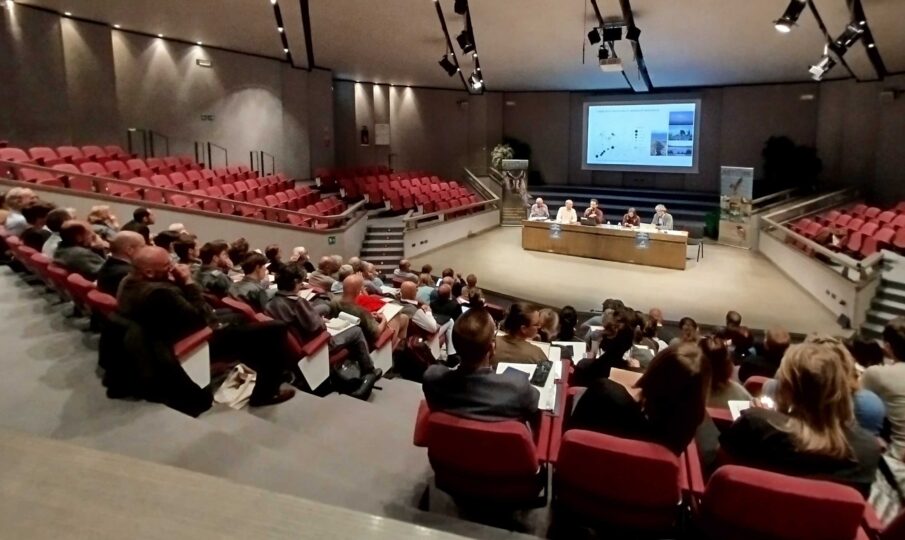
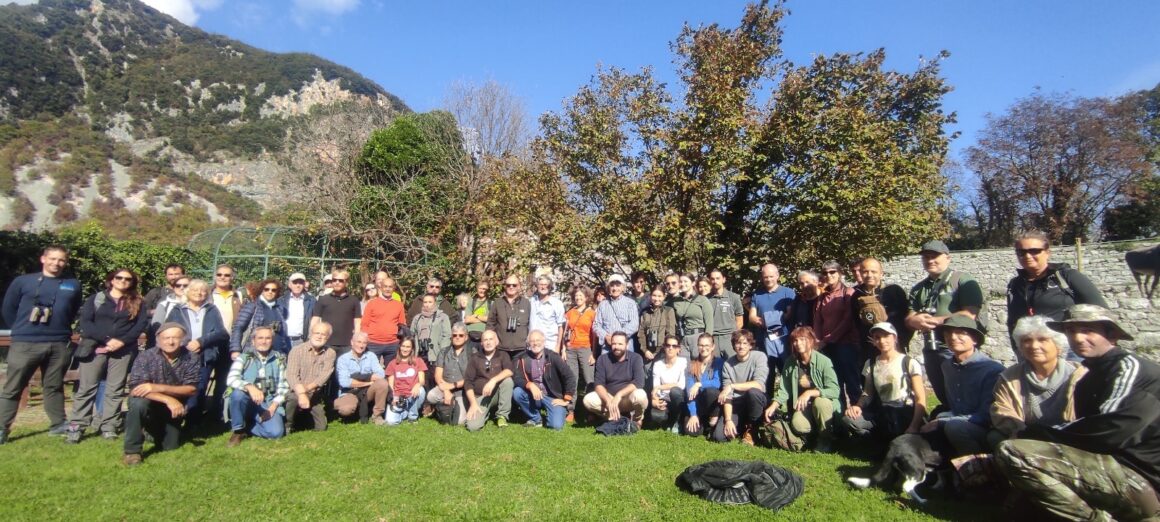
For this reason, sharing experiences and gathering expert knowledge is extremely important, as was the case at the conference “Lead, a Borderless Poison”, organised on 17–18 October in Gorizia by the Society for Ornithological and Ecological Research “Astore” and the Italian Centre for Ornithological Studies (Centro Italiano Studi Ornitologici – CISO). The initiative was supported by several major organisations, including the Italian Society of Toxicology (SITOX) and the Italian Institute for Environmental Protection and Research (ISPRA), and brought together more than 170 participants from 13 European countries.
Among the 15 presentations by researchers of avifauna, hunters, public health institutions, and nature conservation organisations, it was a great honour for us to present our work alongside authors of key scientific studies essential for understanding the impacts of lead poisoning from hunting ammunition on birds, such as Rafael Mateo, Enrico Bassi, Alessandro Andreotti, and Niels Kanstrup.
The conference was opened by Alessandro Andreotti of the Italian Institute for Environmental Protection and Research (ISPRA). Andreotti studies the extent of bird mortality in Italy and across Europe caused by lead poisoning from hunting ammunition and has contributed to impact assessments of lead ammunition on biodiversity in Europe. He is a strong advocate for a coordinated ban on lead ammunition across the entire continent in order to systematically eliminate this threat. In his address, he emphasised that the toxicity of lead has been known for a long time and that its use has therefore already been banned in paints, water pipes, and fuel, yet it continues to be tolerated in hunting, making hunting the largest unregulated source of lead pollution.
Rafael Mateo is a Spanish scientist and one of the leading researchers on lead poisoning from lead shot in waterbirds, birds of prey, red-legged partridges, and environmental contamination from hunting ammunition. He is the author of a comprehensive study that presents extensive data on the impacts of lead ammunition on bird populations. In his talk, he highlighted that in Europe we have, on average, 6% fewer populations of birds of prey than would be present without the use of lead ammunition. He also studied the effects of lead shot on red-legged partridges (in Croatia, the related species is the rock partridge, locally known as grivna), finding that just one to three lead pellets in the stomach cause reproductive problems in this species. One of the birds most sensitive to lead is the griffon vulture, in which lead significantly reduces the activity of the enzyme delta-aminolevulinic acid dehydratase (δ-ALAD), which is essential for heme synthesis. This is a key indicator of lead toxicity, as lead binds directly to this enzyme and disrupts its function, leading to the accumulation of delta-aminolevulinic acid (ALA) and potentially causing various sublethal effects in vultures.
Enrico Bassi is an Italian researcher specialising in lead toxicity in birds of prey. He is the lead author of a study showing that elevated lead levels in the tissues of griffon vultures, Egyptian vultures, bearded vultures, and golden eagles occur more frequently during the hunting season. It is estimated that during ungulate hunting in Italy, between 105,258 and 139,338 lead-contaminated gut piles are left in nature each year, subsequently serving as a source of poisoning for scavengers and other wildlife.
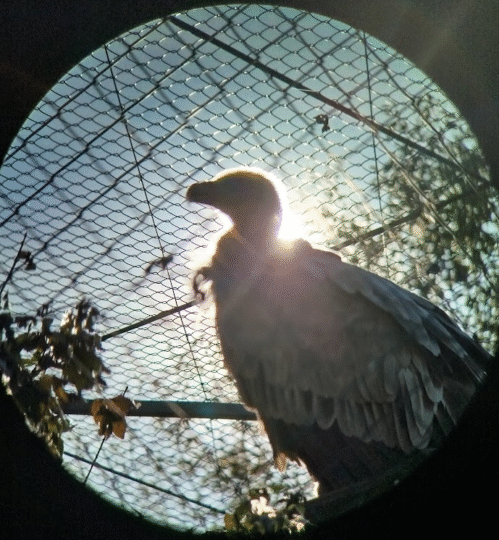
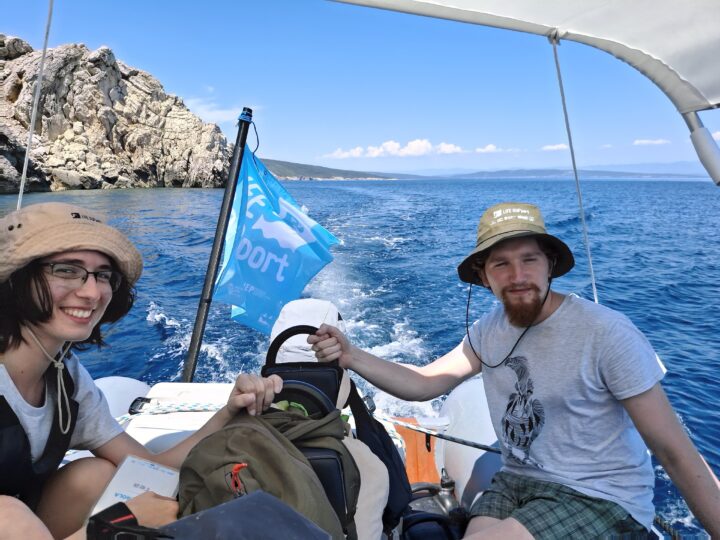
The work of the Association BIOM was presented at the conference by Bolesław Słociński, who highlighted alarming data on lead concentrations in Griffon vultures in the Kvarner region. Between 2018 and 2022, blood lead concentrations were analysed in 25 vultures. Eight individuals had sublethal levels, one had a lethal level, and a further three were just below the threshold for sublethal poisoning. Of the 17 vultures tested in 2024, eight had sublethal levels, while one vulture had lead concentrations in the femur and sternum corresponding to lethal poisoning. In addition to vulture research, BIOM has in recent years conducted analyses of the availability of non-lead shot and studies of hunter preferences in the selection of ammunition for waterbird hunting.
In its work, BIOM places strong emphasis on education and cooperation with hunters. Since 2022, BIOM has organised a total of 14 lectures as part of the “Hunter2Hunter” series, in which expert hunters presented the risks of lead poisoning and the benefits of switching to non-toxic alternative ammunition. BIOM also organised the “Liska in Action” campaign, which warned consumers of game birds in the Neretva Delta about the risks of lead poisoning. This work is complemented by advocacy efforts aimed at ensuring the effective implementation of the European ban on the use of lead shot. At the end of 2024, BIOM organised an international and cross-sectoral workshop on the successful implementation of lead ammunition bans, with speakers from the USA, Australia, the United Kingdom, Denmark, and the Netherlands. BIOM is among the most active civil society organisations in Europe when it comes to a comprehensive approach to addressing lead poisoning.
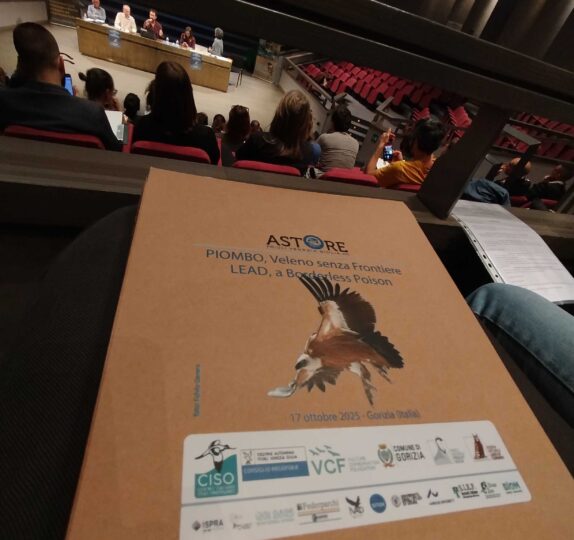
However, the Society for Ornithological and Ecological Research of Friuli Venezia Giulia “Astore” deserves special recognition for its work. In our region, various ornithological societies contribute in different ways to research, study, and nature conservation with a focus on birds. In Croatia, alongside BIOM, the Croatian Society for the Protection of Birds and Nature in Osijek has been active for 35 years, while in the Neretva Delta the ornithological society “Brkata sjenica” (Bearded Tit) from Metković is active. In neighbouring countries, our well-known BirdLife partners include DOPPS in Slovenia and DZPPS in Serbia. However, just 2.5 to 3 hours from Zagreb, in Italy’s border region of Friuli Venezia Giulia, operates an organisation with an impressive portfolio of volunteer-based research and conservation projects. Specifically, “Astore” has been coordinating winter waterbird counts in its region for 50 years, has been organising monitoring of flamingo colonies for the 11th consecutive year, runs a bird ringing camp in the Alps, and regularly publishes ornithological data.
Conference abstracts can be found here.