

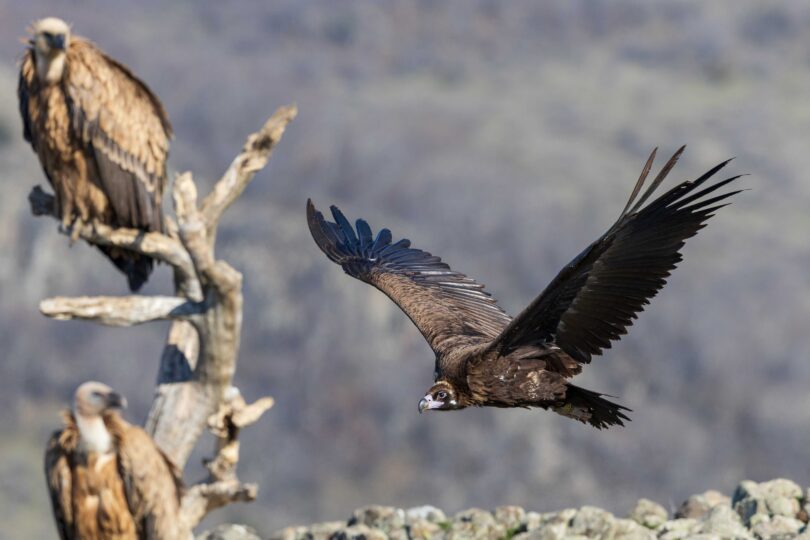
Less than a hundred years ago, it was not an unusual sight to see a dark silhouette of a giant bird soaring above the Slavonian forests, the Dalmatian karst mountains and the Kvarner islands. With a wingspan reaching up to three meters, it glides effortlessly, rarely flapping its wings, using air currents while scanning the landscape below in search of food. This was the scavenger known as the Cinereous vulture, Aegypius monachus.
Its Croatian name “sup starješina” (literally “elder vulture”) describes it as the largest, most impressive and most experienced among vultures, one that carries authority and dominance.
Today, it no longer breeds in Croatia, though it was once a common part of our sky. It inhabited Slavonia, the slopes of Fruška Gora and the hills around Požega, the area between the Sava and Drava rivers, as well as Dalmatia and the Kvarner islands such as Sveti Grgur. It was present in both mountainous and lowland areas. Historical records show that in the 19th century it was a regular bird, especially in continental Croatia. At that time, it coexisted with two other scavenger species: the Griffon vulture (Gyps fulvus) and the Egyptian vulture (Neophron percnopterus), forming once diverse vulture group in our area.
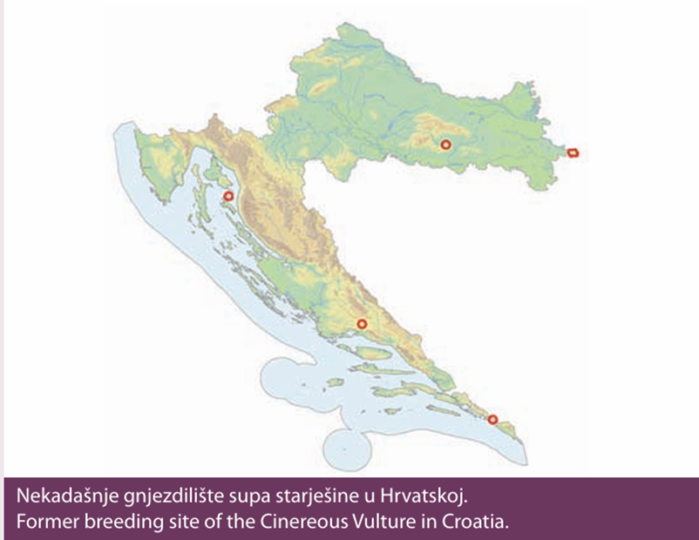
However, during the 20th century, this world gradually disappeared. Changes in livestock practices, sanitary regulations requiring the removal of animal carcasses from nature, poisoning by lead and toxic baits intended for predators, poaching and the loss of large old trees used for nesting all contributed to the disappearance of Cinereous vulture as a breeding species in Croatia. By the mid-20th century, it had disappeared, with only occasional and rare observations recorded thereafter. Today, its breeding population in Croatia is considered regionally extinct, same as Egyptian vulture, which disappeared in the second half of the 20th century.
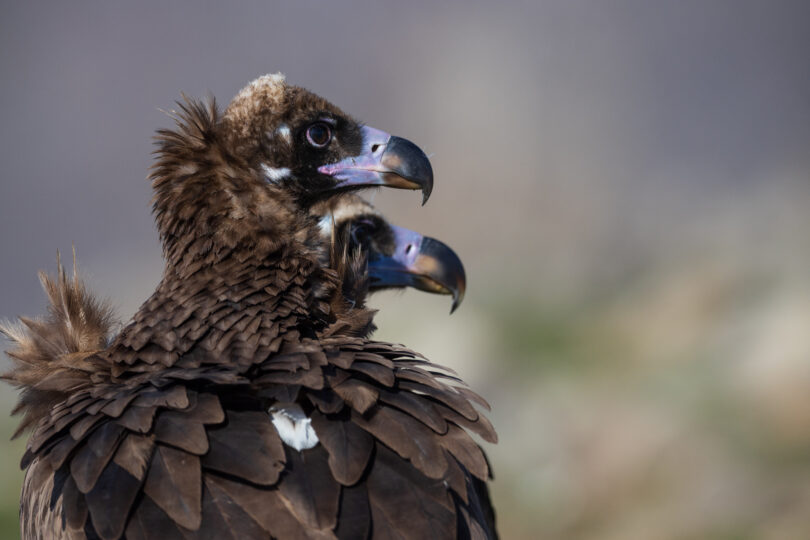
The Cinereous vulture is one of the largest birds of prey in the world: it can weigh up to 14 kilograms and have a wingspan exceeding three meters. It inhabits Europe and Asia. Unlike most birds of prey, it does not hunt live prey. Its role is different, yet equally important, it cleans the environment of carcasses, thereby preventing the spread of disease. It does not compete with Griffon vulture, the two species coexist effectively. Their ecological strategies differ: Cinereous vulture uses its powerful beak to tear open tough skin and tissues of carcasses, often before other scavengers. While Griffon vulture feeds in large groups on softer tissues, Cinereous vulture often feeds alone or in small groups and plays a key role in opening carcasses. In this way, different vulture species function together as a perfectly coordinated natural cleaning system. Cinereous vulture is a species whose conservation helps protect a wide range of other organisms and habitats. Its presence indicates large, preserved and functional ecosystems and its absence speaks just as loudly.
Its ecology also explains why it is somewhat demanding. In Europe, it typically nests in large trees, building massive nests that grow over the years and can reach more than two meters in diameter. Pairs remain faithful to both their territory and nest throughout their lives. Their reproductive cycle is slow: one egg per year, a long incubation period and an extended time for the chick to mature.
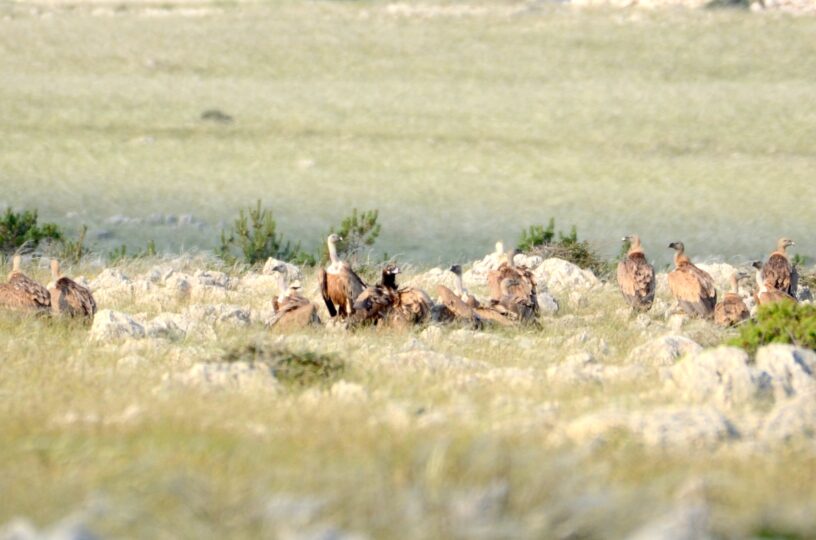
Today, the global population of Cinereous vulture is classified as Near Threatened and it is still declining overall. However, numbers in Europe are increasing thanks to significant conservation efforts. Projects aimed at strengthening existing populations, as well as reintroduction programs, are underway in Spain, Portugal and Bulgaria.
In recent years, occasional individuals from the Bulgarian reintroduction program have been recorded in Croatia, particularly in the Kvarner region. Sightings of birds such as “Riga” on Krk or “Kutelka” on Cres have reminded both experts and the public that nature can recover – but only if the right conditions are restored. It is no longer enough simply not to harm nature; we must actively protect it, as it struggles to recover on its own. In recent years, the population of Griffon vultures in Croatia has significantly recovered thanks to long-term conservation efforts. This positive trend provides a strong foundation and encouragement to consider the possibility that Cinereous vulture may once again build its nests in Croatia and spread its magnificent wings across our skies.
Cinereous Vulture (Aegypius monachus)
Cinereous vulture Aegypius monachus (Linnaeus, 1766)
Order: Falconiformes
Family: Accipitridae – hawks, eagles, buzzards, and allies
The only representative of the genus Aegypius
Global conservation status: Near Threatened (NT)
Population trend: declining
Conservation status in Croatia:
Regionally Extinct (RE) – breeding population