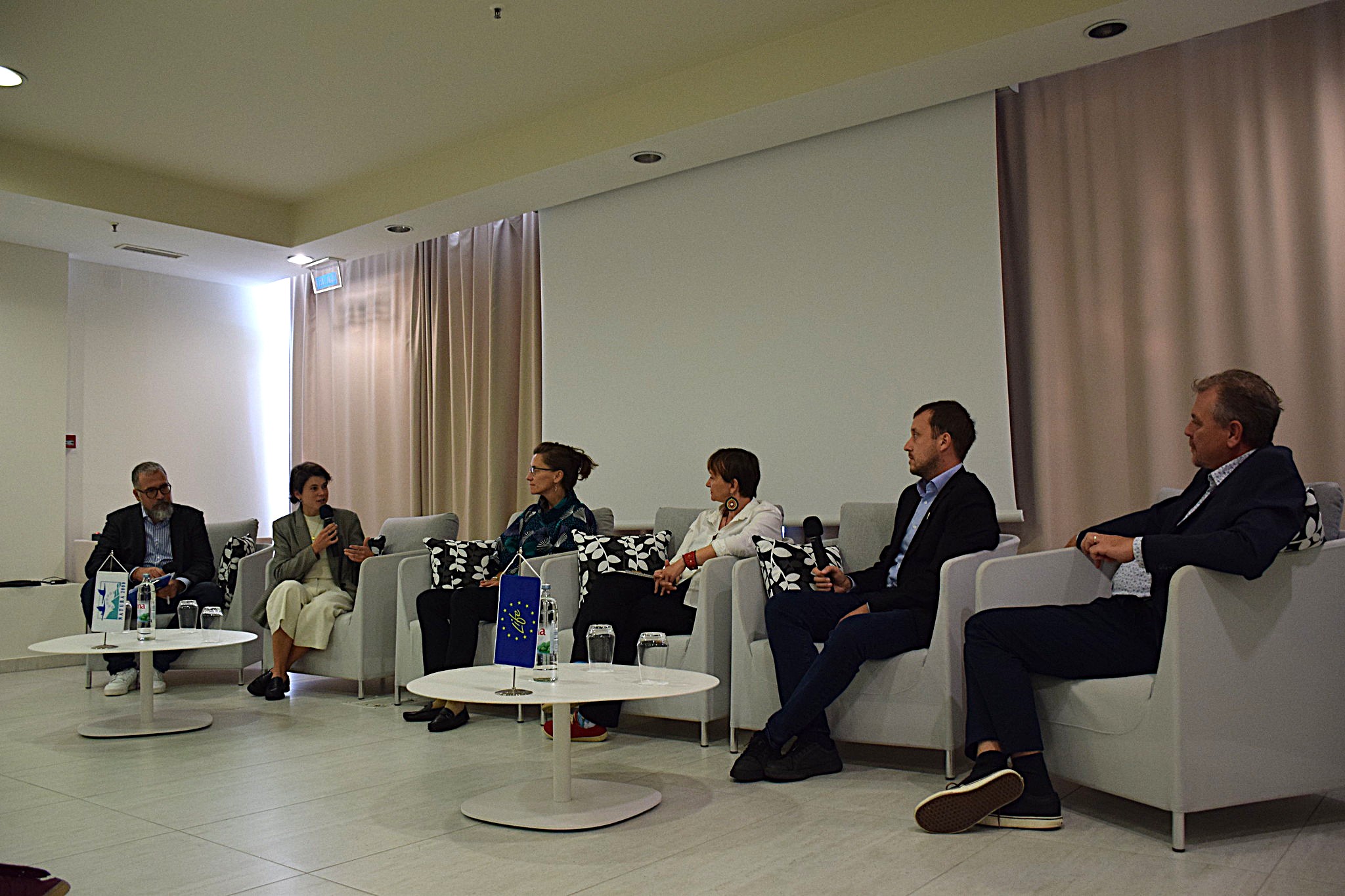


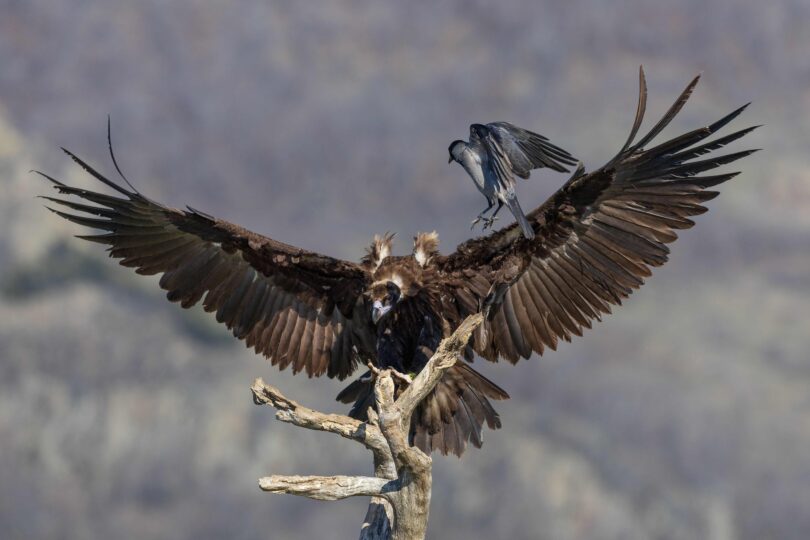
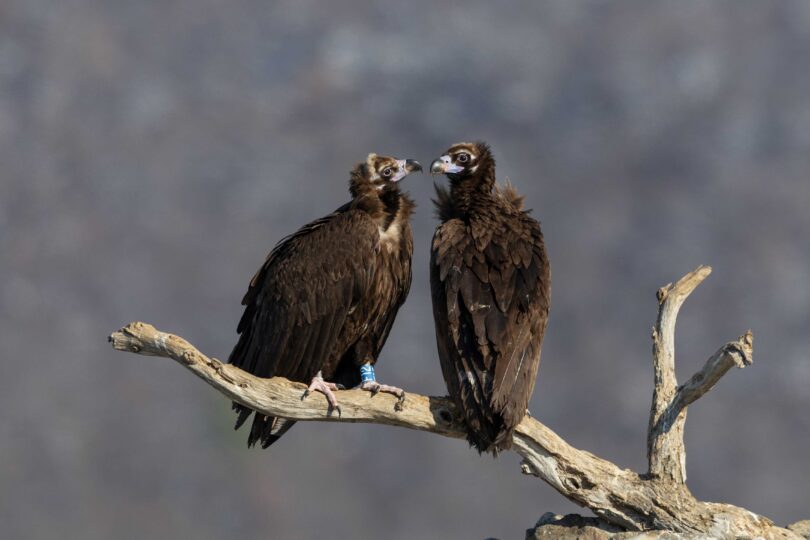
Association Biom, as part of the preparation for the Feasibility Study for the reintroduction of the Cinereous vulture (Aegypius monachus) in Croatia, organized a stakeholder workshop on March 19, 2026 in Zagreb.
Building on long-term efforts to conserve the Griffon vulture (Gyps fulvus) and the successful implementation of conservation measures and population management for this species in Croatia, the aim is to assess the possibility and justification for the reintroduction, i.e., the return of Cinereous vulture.
Prior to the workshop, a stakeholder survey on attitudes was conducted among identified stakeholders, with 15 respondents completing it. The results were used as a basis for discussion.
The workshop aimed to inform and engage stakeholders, representatives of key institutions and organizations, as well as experts in vulture conservation in Croatia, in the process of analyzing the feasibility of establishing a stable population of cinereous vultures in our country and assessing the feasibility of reintroduction. Additionally, the goal was to collect expert opinions, comments and recommendations, and to identify potential obstacles, risks and prerequisites for further planning of activities.
Key stakeholders identified included the nature protection sector, agriculture (veterinary and livestock sectors), forestry, hunting, energy, experts in ornithology and veterinary science, NGOs and organizations focused on raptor conservation and public institutions operating within the breeding range of Griffon vulture in Croatia. Representatives from all relevant institutions and organizations attended the workshop, including: the Directorate for Nature Protection of the Ministry of Environmental Protection and Green Transition, the Institute for Environment and Nature of the same Ministry, the Ornithology Department of the Croatian Academy of Sciences and Arts, the Directorate for Veterinary and Food Safety of the Ministry of Agriculture, Public Institution “Priroda,” Public Institution “Učka Nature Park,” Sokolarski Center Dubrava, Zagreb Zoo, the Veterinary Institute, HEP ODS, Rewilding Velebit, the Department of Hunting and Nature Protection of Karlovac University of Applied Sciences, Forest Administration Buzet (Croatian Forests), and the Vulture Conservation Foundation.
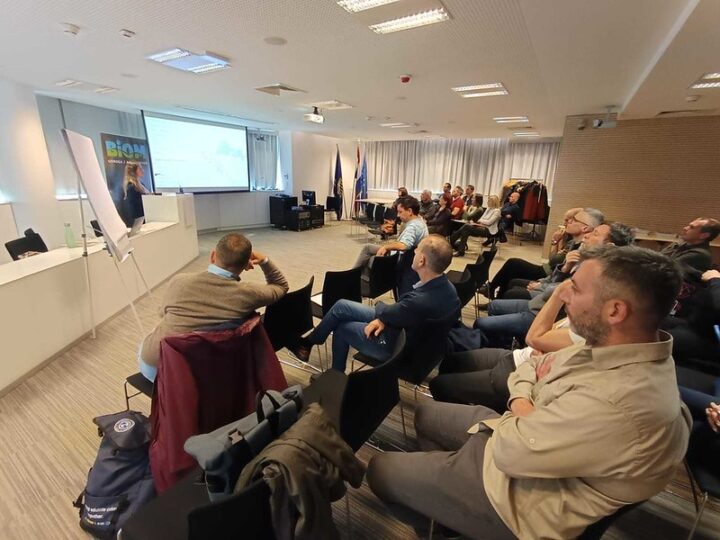
The workshop program began with expert presentations on the ecology of Cinereous vulture, status of the European population, previous conservation efforts and experiences in conserving Griffon vulture in Croatia. These topics were presented by Ivana Ribić from Association Biom, Jovan Andevski from the Vulture Conservation Foundation and Marko Modrić from Public Institution “Priroda.”
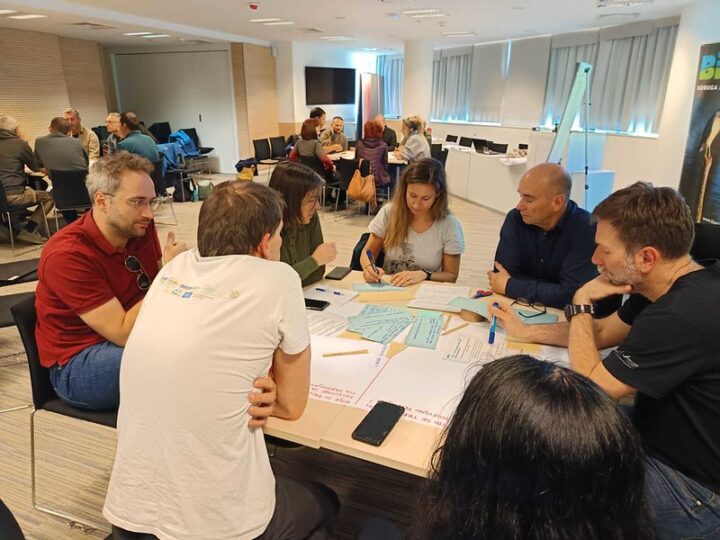
Following the introductory part, participants engaged in group discussions on potential reintroduction areas, food availability, causes of mortality and possible mitigation measures.
Kvarner is the most promising area
During the discussion, Kvarner was identified as the most suitable area for potential reintroduction of Cinereous vulture, with particular emphasis on Cres area (Tramuntana), southern Učka and the island of Sveti Grgur as a historical nesting site. These areas are characterized by suitable habitats: open forests with mosaic vegetation and slopes, availability of food, existing infrastructure for Griffon vultures (feeding sites and rehabilitation center) and relatively low levels of disturbance. Participants emphasized the importance of spatial zoning to reduce disturbance and promote extensive livestock farming. Potential threats identified included hunting, lead poisoning, poaching, forest fires on Učka and energy infrastructure.
Key conditions: food and threat management
Regarding food availability, it was concluded that the existing feeding system for Griffon vultures could serve as a solid foundation for Cinereous vulture, with certain adjustments. The need for continuous carcass availability, transition to lead-free ammunition and strengthening of extensive livestock farming was emphasized.
In terms of safety, risks such as poisoning, electrocution, collision and disturbance at nesting sites were highlighted. Key measures proposed included monitoring individuals with GPS transmitters, mitigation of dangerous power lines and education and involvement of local stakeholders, especially hunters and livestock breeders.
Financial and organizational challenges
Special attention was given to the financial aspects of a potential reintroduction project. It was noted that successful implementation would only be possible through international projects, with the LIFE program identified as a key funding source, but also as a time-limited opportunity due to uncertainty about its future.
Workshop conclusions
The reintroduction of Cinereous vulture in Croatia would be significant for species conservation at the European level, as Croatia has an ideal strategic position and the necessary preconditions to connect currently fragmented populations across Europe. It was also concluded that the existing system for Griffon vultures, feeding sites, rehabilitation centers and food supply systems, represents a major advantage and that existing permits for feeding sites already include Cinereous vulture. Although numerous threats were identified, positive population trend of Griffon vulture is a strong and encouraging indicator, as many measures directly contribute to conservation of Cinereous vulture as well.
As concluded at the workshop, the first step toward a potential reintroduction project is the preparation of a Feasibility Study in accordance with Croatian and EU legislation. Naturally, such a project is financially demanding and not feasible without project funding. The LIFE program has been identified as the most suitable current funding source (co-financing 75%), but there is a limited time for application due to the end of the current programming period in 2027 and uncertainty about the future of the LIFE program. Existing infrastructure and knowledge provide a solid foundation, but additional investment is needed to develop sufficient capacity.
The workshop was held within the project ‘Feasibility Study for the Reintroduction of the Cinereous Vulture (Aegypius monachus) in Croatia’, which is co‑funded by the Rewilding Rhodopes Foundation through the Financial Support to Third Parties mechanism under project No. 101148254 — LIFE23‑NAT‑BG‑LIFE Rhodope Vulture of the EU LIFE Programme.