

By decision of the United Nations General Assembly, 2026 has been declared the International Year of Rangelands and Pastoralists (IYRP). Grasslands and extensive grazing play an irreplaceable role in global biodiversity and throughout the year numerous initiatives will raise global awareness of their importance for food production, climate change adaptation and mitigation, and the health of ecosystems.
For this very reason, through the projects and activities we are engaged in, this year we want to present transhumance – an almost forgotten, yet extraordinarily important pastoral practice of moving livestock and shepherds, which was declared a cultural heritage in Croatia in 2025.
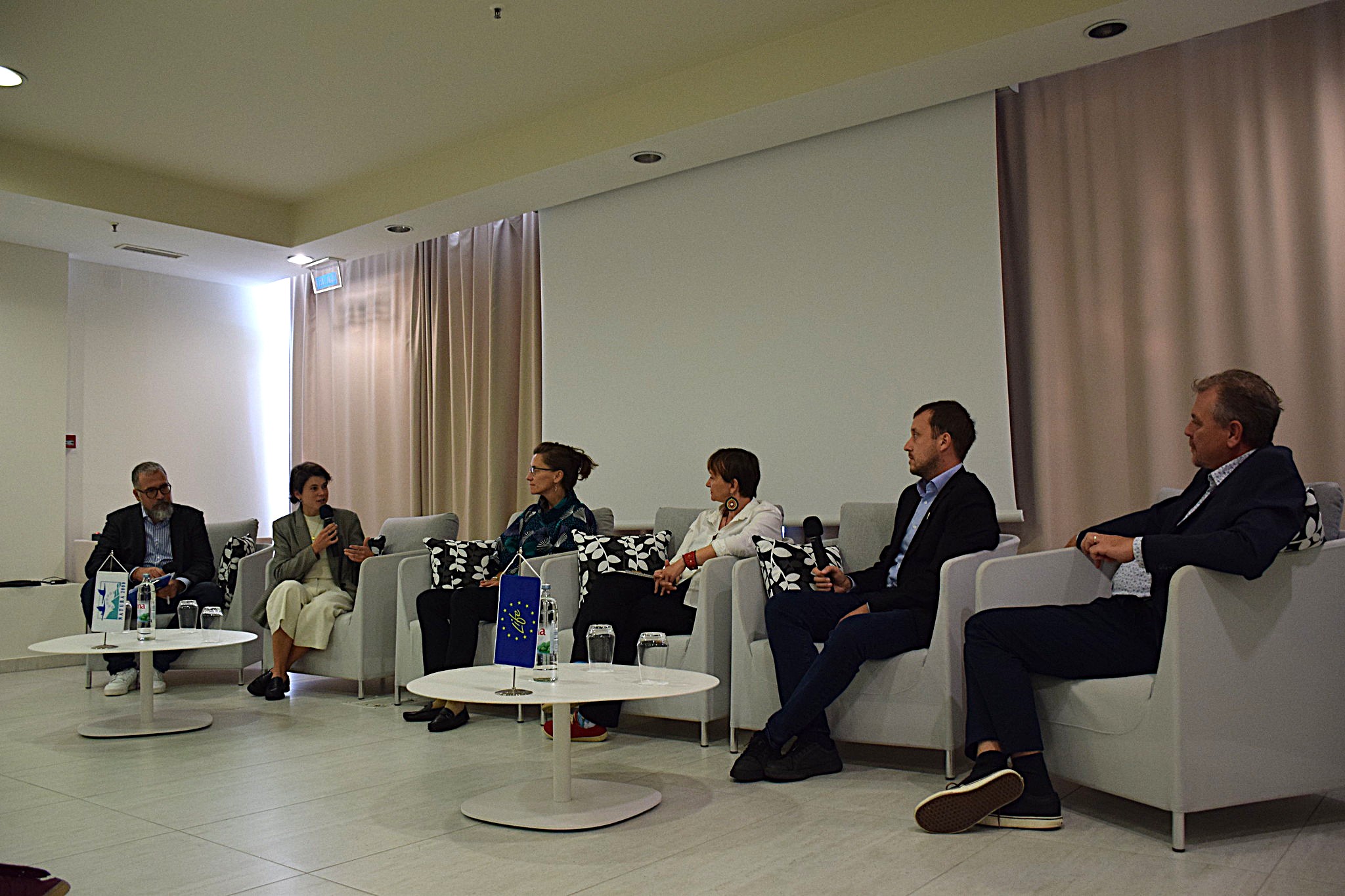
From conversations with ethnologist Grga Frangeš (a place & time – research and services) and Ivan Budinski, nature conservation expert at Association Biom, we highlight insights and reflections on the local development of transhumance, its impact on biodiversity, its current state and the future of the practice.
Transhumance is a technical term from anthropology and geography that originated in France in the 19th century, but it is largely unfamiliar to livestock keepers themselves. In our region, a number of local expressions traditionally refer to this practice, or at least some of its aspects: čobanovanje, selidba, izdig… In most countries there is a similar challenge with traditional naming because the practice was simply formed as a part of everyday pastoral life, one of the annual cycles of livestock farming.
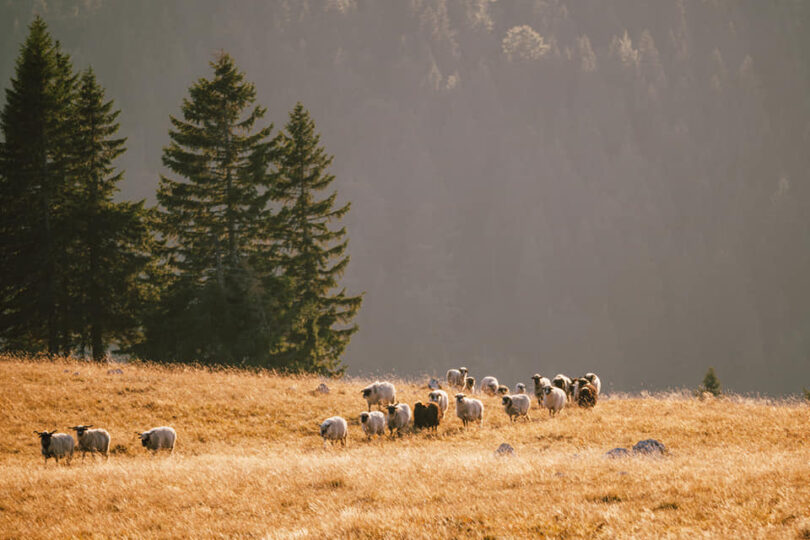
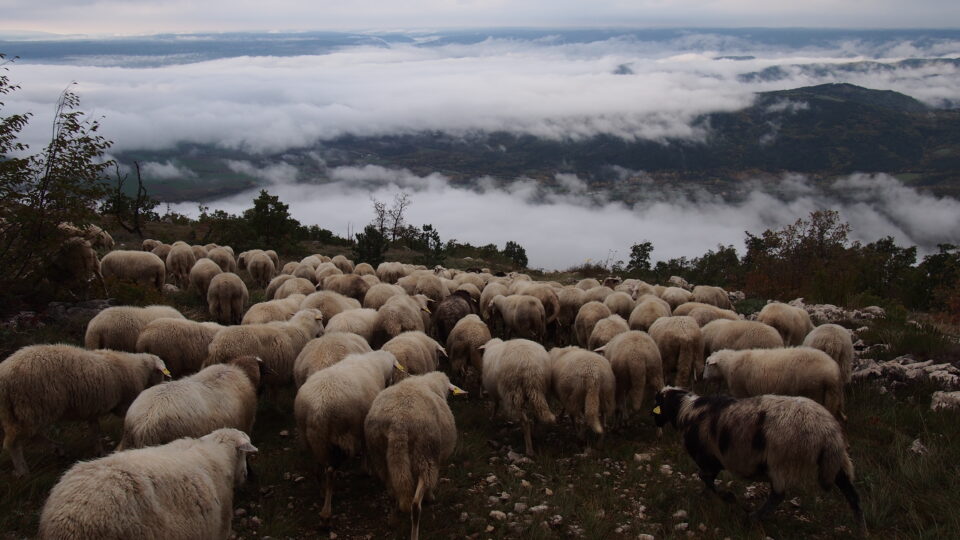
Today in Croatia, the remnants of transhumance can be found in fragments in the mountainous areas of Istria, Velebit, Lička Plješivica and Dinara, mostly as individual efforts by families and small groups. Economically, it is largely oriented toward meeting existing demand for meat and dairy products with specific local, traditional and ecological or ethical qualities. Within these niche markets lies a possible perspective for the survival and revival of this practice.
Transhumance as a key factor in nature conservation
Although transhumance may appear to be a purely human invention, it actually imitates natural processes. Before humans became livestock herders, large herds of wild herbivores moved in similar ways, wintering in warmer regions and spending summers in areas less affected by summer drought.
As with transhumance, these migrations took two main forms: horizontal migration, which covered large distances, and vertical migration, which involved changes in altitude.
Many animal species still migrate in one of these two ways today. It is therefore not surprising that transhumance, as a livestock practice that mimics natural processes, helps maintain ecosystems in a state close to their original natural condition.
New research shows a strong connection between biodiversity and grazing. Grasslands without grazing or mowing tend to experience a decline in plant species richness, and although they may appear lush and green, they gradually turn into uniform vegetation dominated by a few tall and vigorous plant species, most often several species of perennial grasses.
Grazing opens up this overly dense vegetation structure, allowing a wide range of species to appear, each adapted to different levels of vegetation cover, shading, and plant height. Because the landscape is never uniform, animals tend to visit some areas slightly more or less frequently, resulting in different grazing intensities across the landscape.
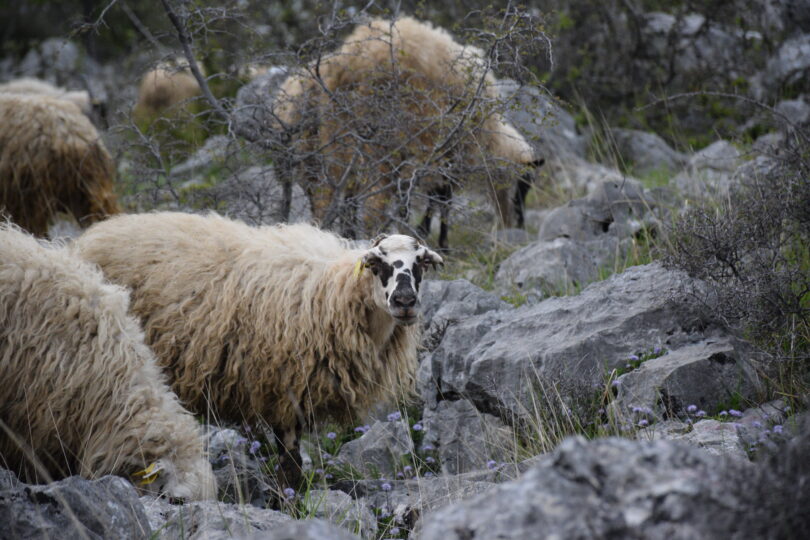
Even the most heavily grazed and trampled areas, where the soil may be partially exposed, support specific biodiversity, ranging from very low-growing plants (e.g. Turkish starflower (Sternbergia colchiciflora)) to solitary bees that actively seek out such patches of bare ground. Birds are also easiest to observe in such areas, and for most grassland bird species, at least partially grazed grassland is more suitable than uniform, tall grassland.
Open habitats that cannot be maintained by mowing (such as steep or rocky terrain) depend entirely on grazing. These include rough rocky pastures, karst or mountain grasslands, open scrublands, and sparse forests, which in this context are referred to as silvopastoral systems.
Transhumance today
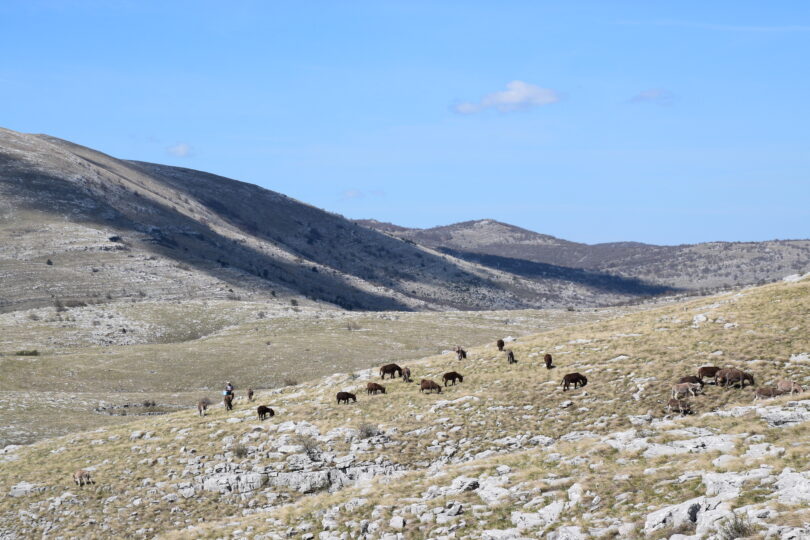
The decline of transhumance in Croatia was greatly accelerated by war in the 1990s, particularly because the areas most affected by the conflict were also those where transhumance had been most widespread—Velebit, Dinara, Svilaja and eastern Lika.
From a historical perspective in the area, transhumance has experienced many interruptions before: the fall of the Roman Empire, outbreaks of the Black Death, Ottoman conquests and world wars. Yet it always managed to return to this region, sometimes through new actors and communities.
The logic of transhumance is formed by ecological and geographical characteristics of the landscape itself, and as long as there are people engaged in extensive livestock keeping, some form of seasonal herd movement can be expected to reappear in the area
At the same time, transhumance is disappearing even in regions far from war zones, largely because fewer people are willing to adopt a partially nomadic lifestyle. One possible way to ensure its long-term survival may be the establishment of larger farming units or cooperative family farms where responsibilities for herding can rotate. This would prevent individuals from being absent for long periods, which can make private life difficult. Infrastructure also matters greatly. There is an enormous difference between spending months in a makeshift shelter far from any road and staying in a building connected to roads, electricity and water.
The disappearance of transhumance has already led to overgrowth of mountain grasslands, as well as grasslands at mid-elevations that were traditionally used while mountain pastures were still covered by snow. Even where grasslands have not been overtaken by shrubs or forest, the absence of grazing allows large amounts of dry organic material to accumulate. This makes occasional wildfires stronger, harder to control and far more damaging in terms of greenhouse gas emissions.
If transhumance disappears, we would also lose a sustainable economic use of mountain karst pastures. Looking more broadly, livestock farming on Croatia’s karst terrain could only be feasible at larger scales if some form of seasonal movement is involved. Promoting intensive indoor livestock production in such landscapes makes little economic sense when lowland regions are far more suitable for that model.
Extensive livestock farming on the Croatian karst has long been not only an economic activity but also a fundamental part of the region’s identity. Without it, there would be very few reasons left for people to live and work in karstic landscapes.
Future prospects
In recent years, the overall situation has not changed dramatically. However, many practitioners feel a growing sense of injustice, frustration and resignation regarding how state institutions treat them—particularly in relation to grazing rights, eligibility for subsidies, compensation for damage caused by wolves and other administrative issues. This is a rather pessimistic signal about the direction in which things may be heading.
Some practitioners are aging without successors to take over the farming businesses. On the other hand, there are also several relatively young and active families engaged in this work. The physically demanding tasks involved in moving herds typically fall to younger adults within the family or to hired help in the form of professional shepherds.
This represents one of the vulnerabilities of the transhumance: its continuation depends either on younger generations choosing this profession or on the availability of professional shepherds—an occupation that currently has little prestige in Croatia. Promoting this profession and ensuring its intergenerational transmission is precisely what should be encouraged through its protection as intangible cultural heritage. However, achieving this requires carefully designed programmes and committed actors to implement them.
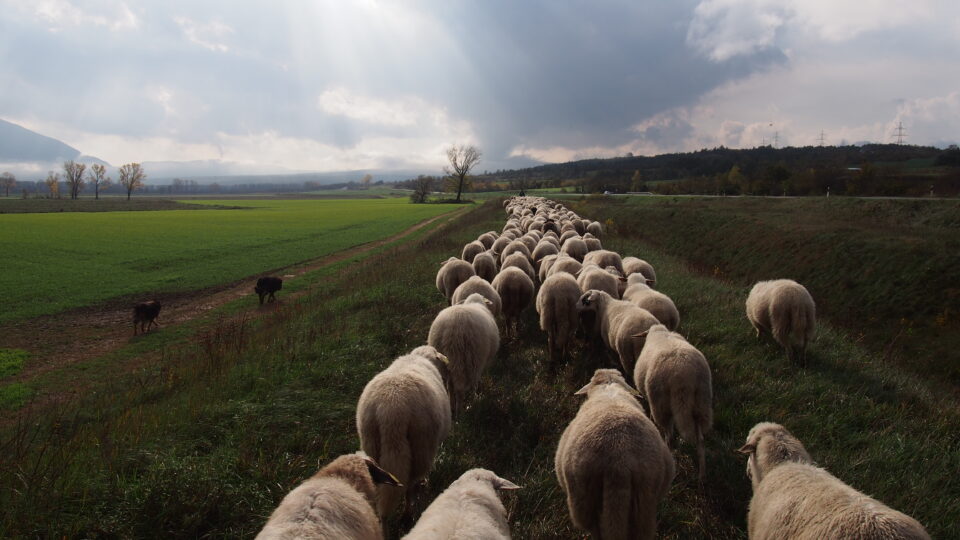
Examples from other countries already exist. In the Alps and the Pyrenees, transhumance plays a crucial role in maintaining mountain grasslands. During seasonal herd movements, these events are often celebrated as local festivals. The practice is so socially accepted that streets are sometimes temporarily closed to allow herds to pass through towns and villages.
In Croatia, however, the social status of this profession remains low and insufficiently appreciated. In countries such as Romania and Albania, transhumance is still an important economic activity, while in Italy and Spain it is valued as an important heritage, a source of local identity and the basis of highly regarded traditional products.
Responsibility for preserving this practice does not lie solely with livestock farmers. The very fact that transhumance continued even after wartime disruption suggests that it still holds economic value and that people are willing to maintain it. Yet perhaps the biggest challenge lies in the way state institutions and policies gradually push extensive livestock farming aside through a lack of support.
Croatian livestock farmers are often told that rigid treatment results from EU regulations, but this explanation becomes less convincing when we see that the same regulations are interpreted much more flexibly elsewhere—for example regarding grazing subsidies, small dairies or local slaughterhouses.
A major current challenge for the survival of transhumance is the lack of interest and understanding for extensive karst livestock farming within Croatian agricultural policy, along with heavy administrative burdens and rigid practices related to leasing public grazing land or allocating subsidies.
Declaring 2026 the Year of Rangelands and Pastoralists is a symbolic gesture that will not by itself save this practice. However, the occasion should be used to raise public awareness and start a dialogue, above all about practical approaches that can truly support the remaining custodians of this tradition.
Govornici: Ivan Budinski (Biom), Grga Frangeš (Mjesto i vrijeme)