

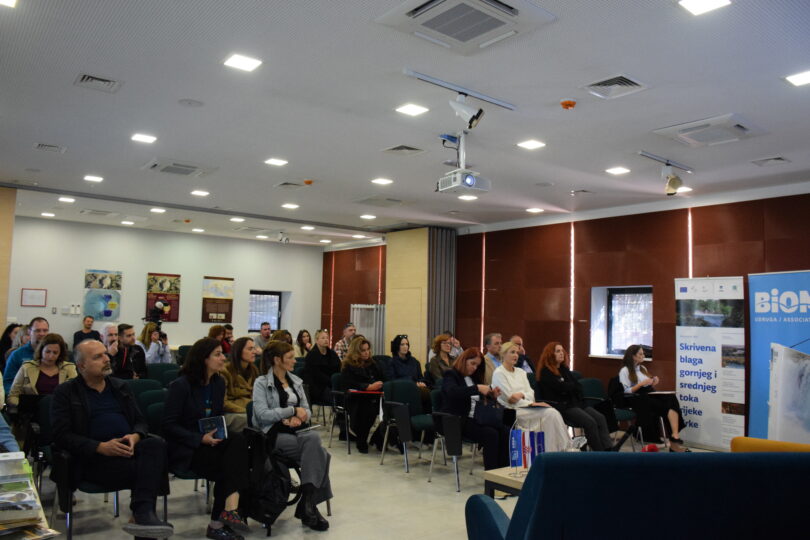
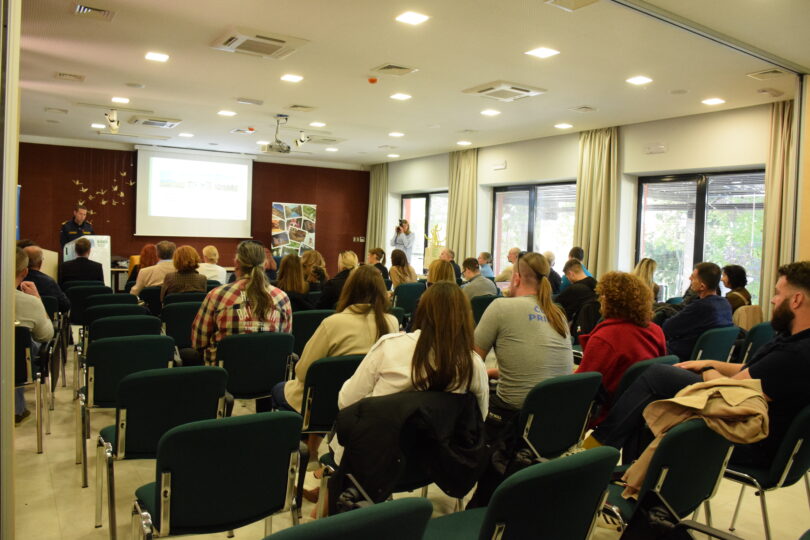
The Biom Association and its partners presented the Mosaic of LIFE project at the Krka Eco Campus. Over the next five years, the project will restore more than 560 hectares of grasslands in the Krka, Cetina, Svilaja and Dinara areas.
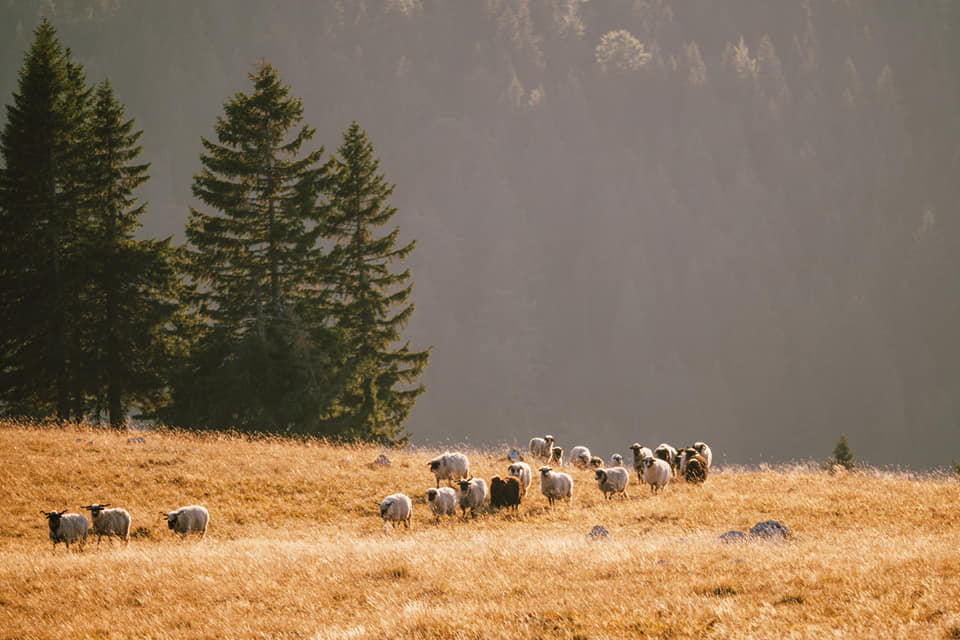
The five-year “Mosaic of LIFE” project is dedicated to restoring the mosaic Mediterranean landscape and conserving threatened grassland bird species. This landscape, shaped by millennia of human presence and livestock grazing in karst areas, is a unique combination of grasslands, forests, shrublands, agricultural land, and settlements. The abandonment of traditional agriculture and livestock farming has led to grassland overgrowth and a decline in biodiversity.
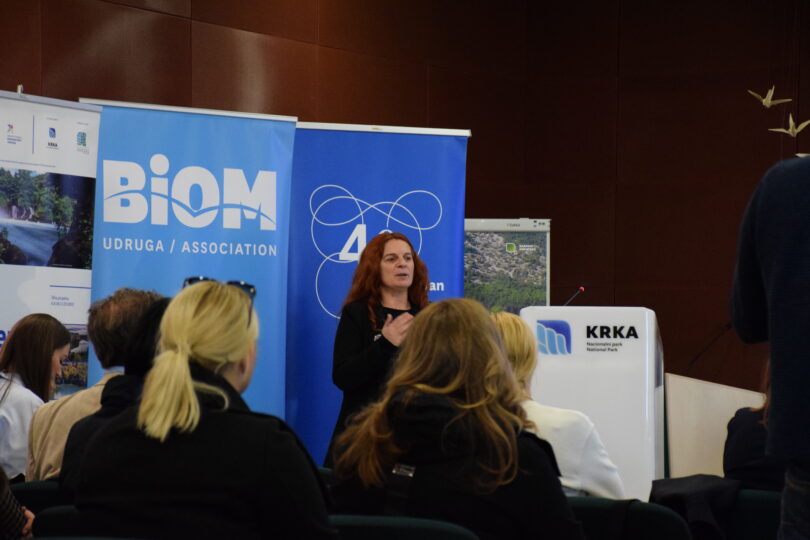
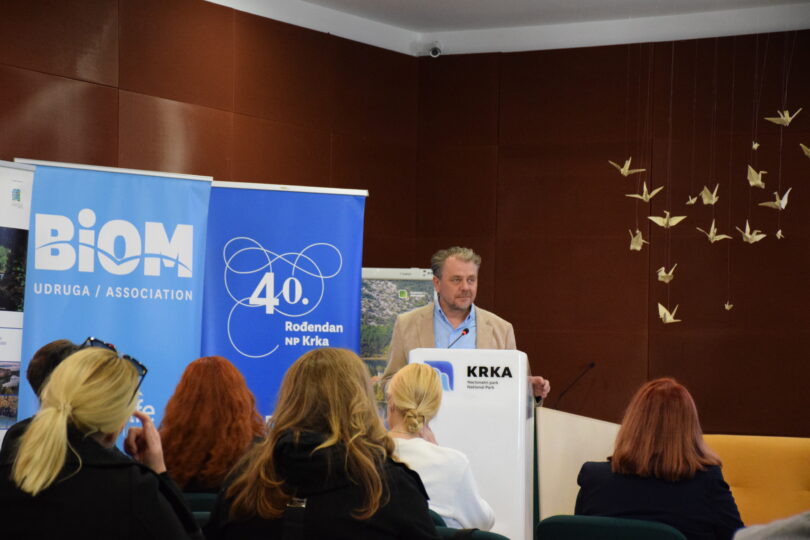
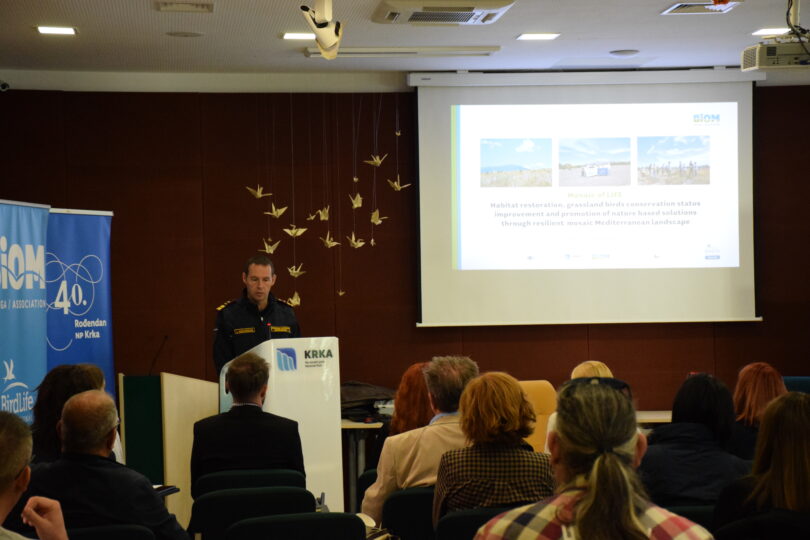
The presentation was opened by project manager Tomislav Hudina from the Biom Association, who provided a detailed overview of the “Mosaic of LIFE” project, focusing on work packages, planned activities, and key objectives. He particularly emphasised cooperation with the local community and the support of project partners as essential prerequisites for success.
“With the Mosaic of LIFE project, we want to show that nature conservation can go hand in hand with human activities. Our focus is on landscape mosaicness, grassland restoration, and cooperation with the local community to protect threatened species and habitats in the Krka, Cetina, Svilaja, and Dinara regions. In the next five years, we will carry out numerous activities together with local and regional authorities, farmers and livestock breeders, hunters, mountaineers, and everyone who cares about this area,” said Tomislav Hudina, project manager.
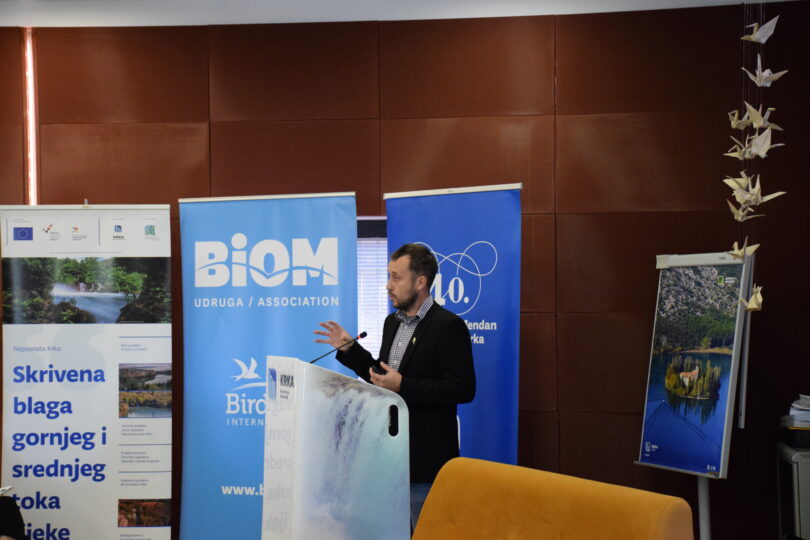
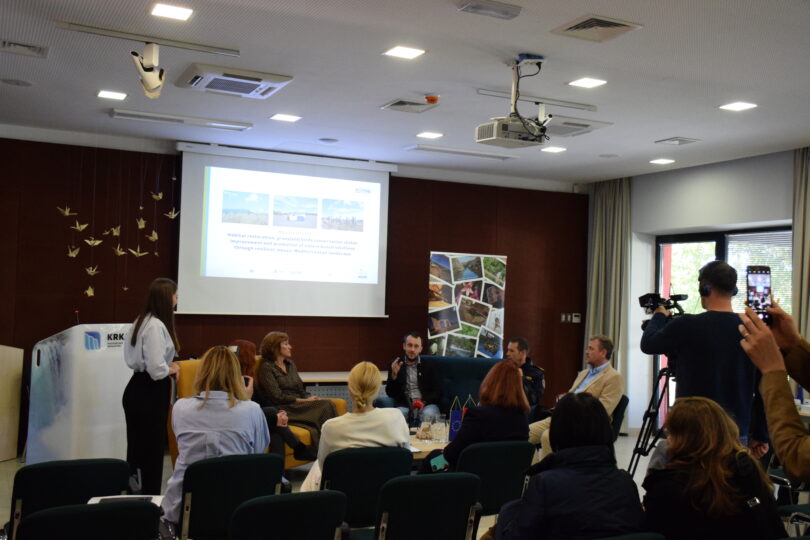
Project partners then presented their roles and upcoming activities.
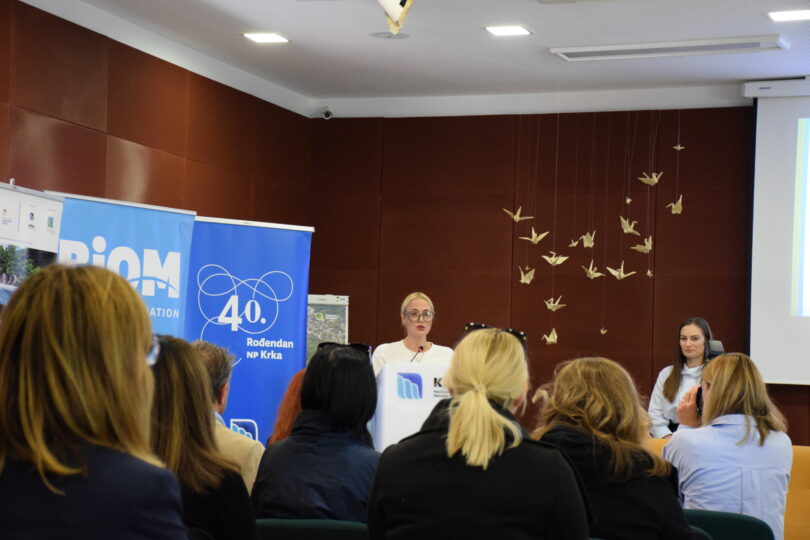
Nella Slavica, Director of Krka National Park, spoke about the importance of the project for conserving mosaic habitats within protected areas.
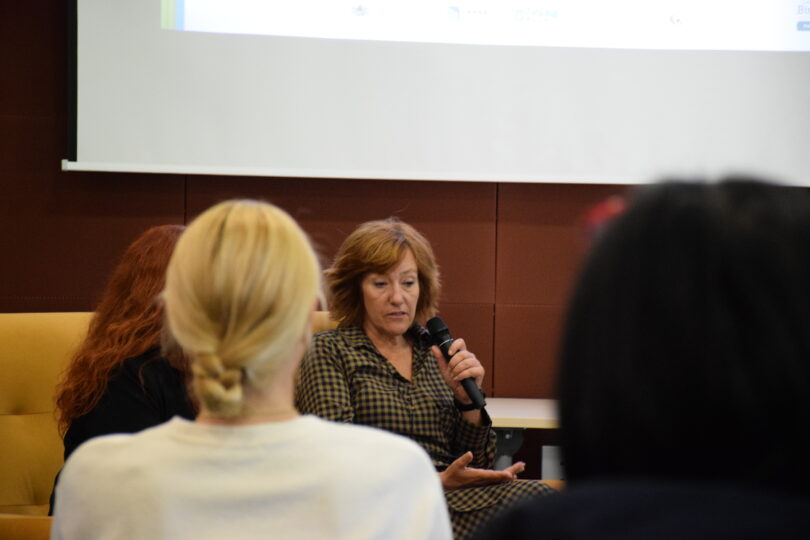
Inga Kukolj from the Ecological Association Krka Knin highlighted the importance of involving the local community, especially livestock breeders, as well as the many educational activities soon to begin.
Split-Dalmatia County Fire Chief Ivan Kovačević emphasised the role of firefighters, the importance of strengthening their capacities through training, and the relevance of controlled burning.
Hrvoje Kutnjak from the University of Zagreb – Faculty of Agriculture presented the scientific component of the project and the use of innovative methods in grassland conservation.
“We are truly proud to be part of this valuable project, which supports both nature conservation and sustainable community development. It is an honour and a pleasure to contribute over the next five years and help achieve meaningful results that will serve as examples of good practice for others.”
said Inga Kukolj of the Ecological Association Krka Knin.
Project Goals
Over its five-year duration, the “Mosaic of LIFE” project will restore at least 560 hectares of grassland and improve management on an additional 1,020 hectares. The objectives include increasing populations of key grassland bird species—such as the Stone Curlew, short-toed and greater short-toed larks, and tawny pipit—supporting livestock breeders, restoring traditional wells and ponds, and developing Croatia’s first result-based measures for grasslands. The project also includes education, awareness-raising on the importance of grasslands, and promotion of local products and services. In this way, “Mosaic of LIFE” continues the efforts of the Dinara back to LIFE project, transferring gained knowledge and good practices across a wider region of Dalmatia.
As part of the project, Recommendations for the Conservation of Landscape Mosaicness will be developed and integrated into official Natura 2000 management plans. This ensures long-term sustainability of project results through spatial planning and land management at the regional level.
Alongside the Biom Association as project lead, partners include the Ecological Association “Krka” Knin, the University of Zagreb Faculty of Agriculture, Krka National Park, and the Firefighting Association of Split-Dalmatia County. Associated partners are the Ministry of Environmental Protection and Green Transition – Institute for Environmental and Nature Protection, the Ministry of Agriculture, Forestry and Fisheries, the Public Institution More i krš, and the Public Institution Priroda of Šibenik-Knin County.