

While the conservation work on the smaller islands around Lastovo remains essential to secure safe breeding for shearwaters in Croatia, the long-term conservation goal should also aim for the permanent removal of invasive rats from remote, uninhabited islands with large suitable habitat for shearwaters. Therefore, a key outcome of the LIFE TETIDE project is the feasibility study for the permanent removal of rats from Yelkouan (Puffjnus yelkouan) and Scopoli’s shearwater (Calonectris diomedea) colonies on Croatian islands in the SPA ‘Offshore Islands’ (Pučinski otoci), including Palagruža, Svetac and Jabuka. Black rats (Rattus rattus) were introduced to these islands a long time ago and threaten shearwater populations by predating their eggs and chicks. The removal of rats from these places would allow the island ecosystems to recover and for seabirds to have safe breeding conditions again. Similar projects are carried out across the Mediterranean, even on the nearby Tremiti islands – just on the other side of the Adriatic in Italy.
To see if such work can also be carried out on larger islands in the Croatian Adriatic, a feasibility assessment is needed. Following seven different criteria, it tries to see if there are any red flags which would make a rat eradication effort impossible, by checking if the work is technically feasible, if it is socially and environmentally acceptable, if the legislation is in place, if there is capacity and funding available and if the project is sustainable – e.g. will the result last. Prior to our work on LIFE TETIDE, a similar feasibility assessment was carried out on the island of Sušac in 2020 as part of the LIFE Artina project.
The focus of the field visit specifically is mostly to assess the technical feasibility of such an operation. As the removal of rats from large islands can either be done ground-based (with a network of bait stations), or via aerial dispatch (with helicopter), we invited two experts in these respective fields to join us to the islands: Karen Varnham from the RSPB (United Kingdom) and Paolo Sposimo from NEMO (Italy), a project partner on LIFE TETIDE. Furthermore, we were joined by two staff members from BirdLife Malta (Martin Austad and Ricardo Fernandes), another project partner on LIFE TETIDE, as they have a lot of experience with rat removal from cliffs and can help assess if the cliff areas on these ‘Offshore Islands’ form any obstacle in either of the approaches. We were supposed to take off on our expedition in May this year, but unfortunately bad weather conditions ruined those plans… As such, we decided to try again after the peak tourist season, in September. This time we were luckier(!), though not fully still…
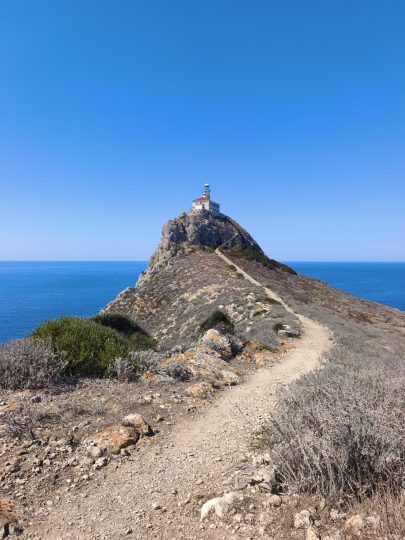
Classic view of the Palagruža lighthouse. Photo: Ricardo Fernandes.
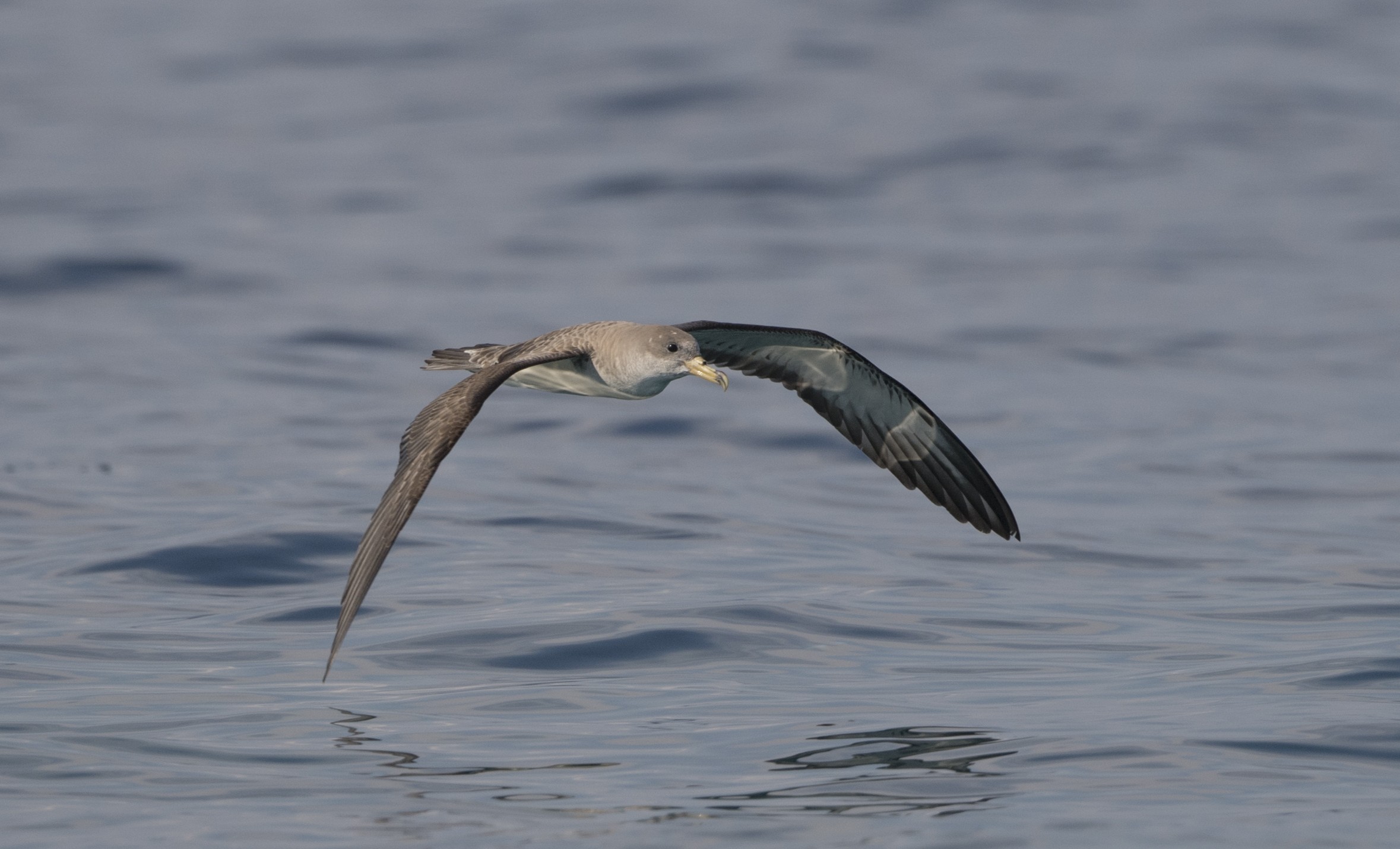
8.9.2026 – We arrived to Vis in the late afternoon of Monday 7th of September. The next morning, we met with Javna Ustanova More i Krš, also a project partner, on Komiža riva for a coffee after which we set off to Palagruža. The island is connected to the myth of Diomedes, a Greek war hero whose name is reflected in the scientific name of the Scopoli’s shearwater (Calonectris diomedea). On the way there we saw several individuals in their typical, elegant, low-gliding flight.
Upon arrival, we first circumnavigated the main island to have a better look at the cliffs, as well as the collection of smaller islands and rocks around it. After that we spent a few warm hours walking across the main island through the dry scrub, mostly Tree spurge (Europhorbia dendroides), and overlooked by the few pairs of Eleonora’s Falcon (Falco eleonorae present there. We even checked some suitable shearwater burrows for occupancy, unfortunately they were all empty. Besides plenty of signs of rats, including some dead individuals, we also noticed several patches of the invasive Ice plant (Carpobrotus edulis). The warm weather without much wind also allowed for some nice migration over the islands. During the few hours we spent there, we observed close to 100 Honey buzzards (Pernis apivorus), several tens of Marsh Harriers (Circus aeroginosus), some Sparrowhawks (Accipiter nisus) and even two Black Storks (Ciconia nigra). After a stop at the lighthouse and a short swim around the boat, we returned back to Vis.
On the way back we passed the island of Biševo, which despite beautiful cliff sections, does not seem to have any breeding shearwaters, or not anymore. We picked up one of the sound recorders, which were installed across several islands in the Vis archipelago to help detect, and possibly estimate, Yelkouan and Scopoli’s shearwater populations in the area.
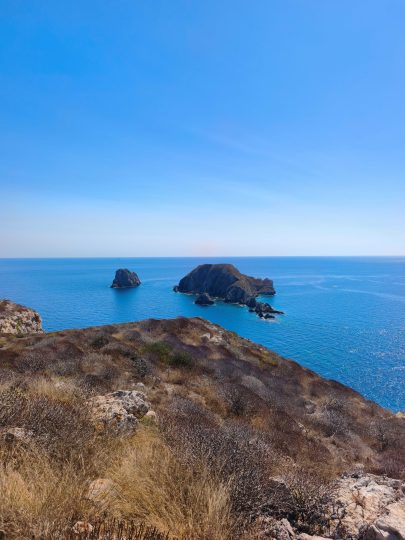
9.9.2026 – The following day we got up extra early as the forecast showed the southern winds (jugo) would start picking up during the day. We met with local skipper Milan Maleš in the harbour of Komiža at 5.00 in the morning as he would be taking us to Svetac. Once on the island , we had about 1.5 hours to walk around and get at least an impression of the island, which is considerably larger than Palagruža – and with much denser and taller vegetation, including a lot of Aleppo Pine (Pinus halepensis). The island also has some impressive houses and vineyards. During our stay we were warmly welcomed by one of the family members who resides there for a part of the year. Meanwhile the waves were slowly increasing and we had to return back to the boat, as the only pier is located on the south of the island. We then circled the island to photograph the impressive cliffs, which are home to what is believed to be Croatia’s largest colony of Scopoli’s shearwater. During the day, however, the cliffs are mostly the domain of the Eleonora’s Falcon. Finally, it was time to leave and with the wind and waves increasing, we returned, via the island of Brusnik, splashing our way back towards Komiža.
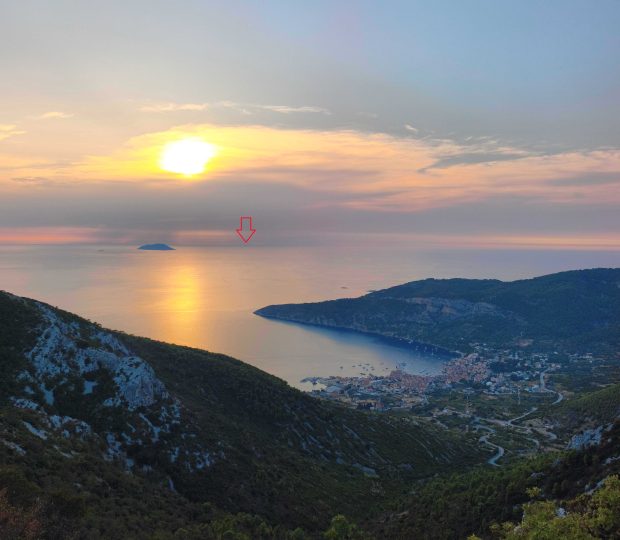
Unfortunately the weather did not allow for us to visit the island of Jabuka, but we could see the island from a distance from Svetac and from the peak of Vis island, Hum.
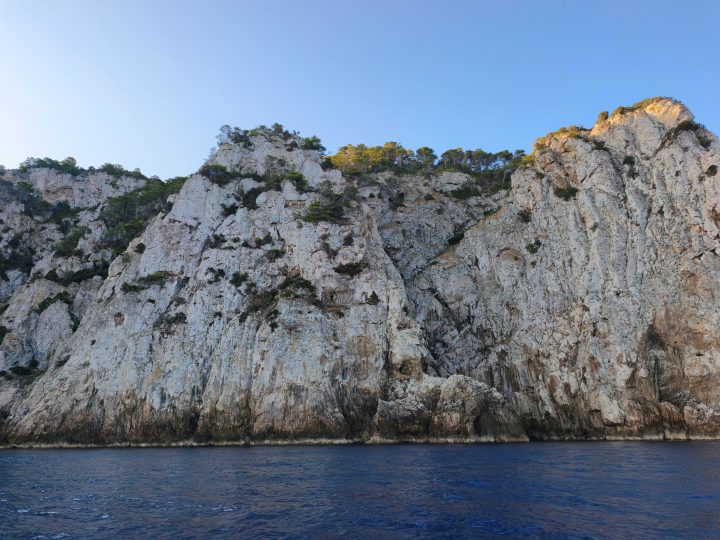
10.9.2026 – As the weather did not allow for any island visit on Thursday, we visited the GeoPark visitor centre in Komiža where we got a short tour and saw our best (photographic) views of Jabuka yet… we could even hold a stone collected from the island! The centre was also kind enough to install the project info panel and put some of our leaflets on display. Later this year we will be returning to GeoPark to host a workshop with boat owners and fishermen where we will talk about island biosecurity – making sure no new rats are brought to islands once they are rat-free.
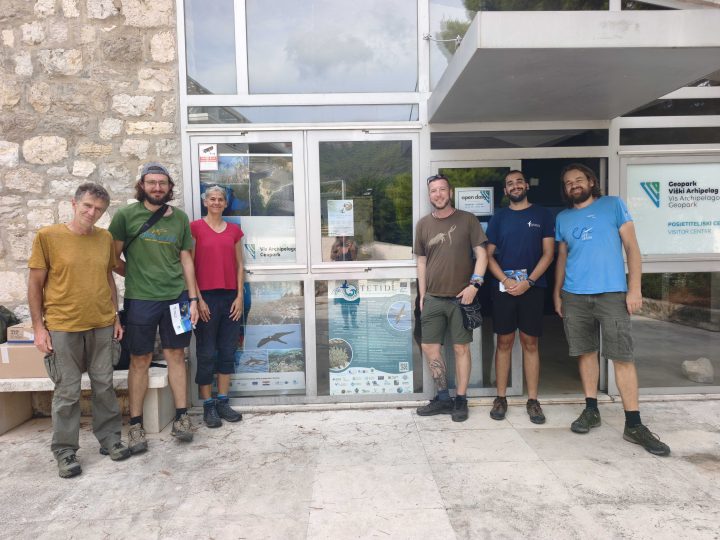
The next day it was time for goodbyes as the team disbanded and returned to their different home countries. While the weather did not fully allow for having as much time as would have been desired for such a study, we managed to get a good overall impression and we will be working on writing up our observations and the final report of this study visit.