

The path of a biology student usually takes the following steps: you join a student association, “poke around” until you realize that you are most interested in xy group of organisms, and usually go on to work professionally with that group. After years in the field and passing through different sections within the student association, finally picking one, it’s not expected that you pursue something new. I became familiar with wading through reeds with a net looking for toads, marking turtles by cutting into their shells, as well as turning over garbage at the landfill looking for snakes. However, after getting used to my view constantly fixed on the sunlit rocks and eyes peeking out of the water, I had to train my eyes to the flickering movements among the branches and the recognition of dark outlines in the air.
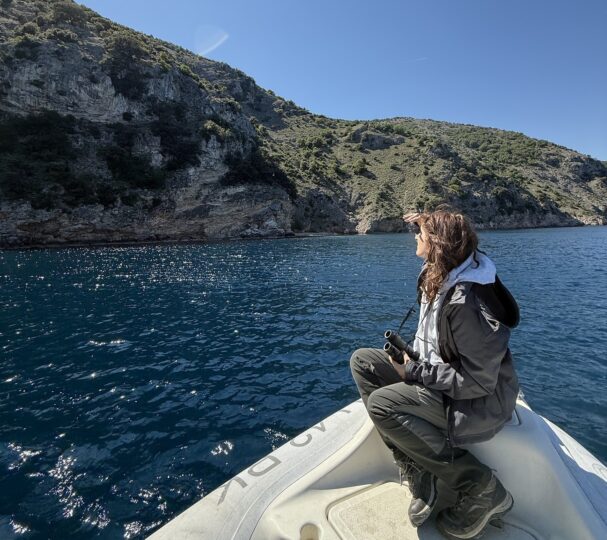
As a long-term European Solidarity Corps volunteer in Biom, I already expected that during this exciting year full of field trips and various educational activities, I would have the opportunity to learn much more about birds and their identification than I otherwise would have. Although volunteers on this project are not expected to have any prior knowledge (besides the implied love of nature and commitment to its protection), during the volunteering itself there are plenty of opportunities to learn about different groups or individual species of birds. From working at the Griffon Vulture Visitor Center on Cres, to birdwatching tours in urban habitats, and even monitoring golden eagles, we had the opportunity to better familiarize ourselves with the ecology of certain species, and the forms of their protection implemented by Biom and its partner organizations.
However, there is one project in which I had the opportunity to participate, which surpassed all other learning methods. The project in question is BirdID, a bird identification training that has traditionally been conducted by Biom for all amateurs, curious and even experienced birders. Attendees get the opportunity to visit different types of habitats with Biom’s experts, as well as hear and see a huge diversity of birds in their natural environment. We all got one more (important) reason to walk to the first body of water, stop in the park and perk up our ears, and eagerly sign up for the next Biome volunteering opportunity. Training lasts throughout the year, so shortly after my arrival in Biom at the end of February 2025, I was on my first fieldwork.
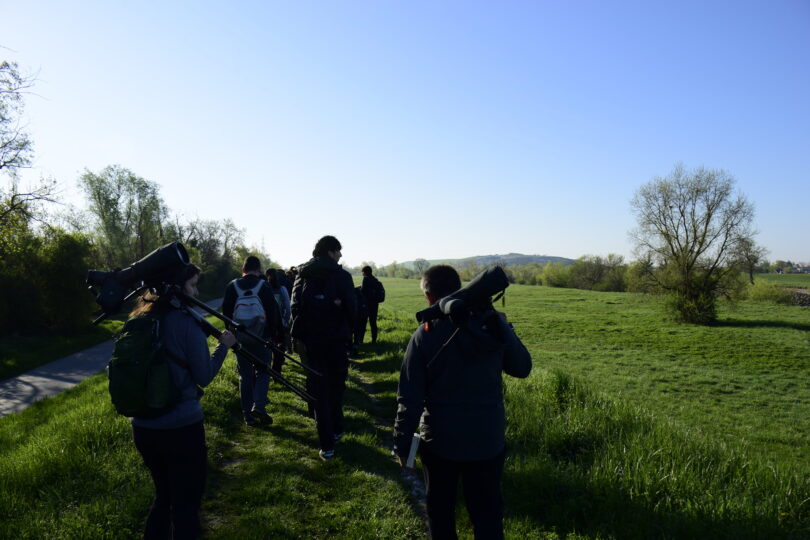
We started the training at Savica – a significant landscape of Zagreb, which includes the only remaining backwater of the Sava river separated from it by an embankment. As such, it represents a significant wet habitat with the characteristics of a swamp, which provides refuge for many resident, wintering, as well as birds in flight in the immediate vicinity of urban settlements. With binoculars and Biom’s edition of “Birds of Croatia and Europe” in hand, we slowly set out to explore this habitat. It turned out that the road itself along the embankment leading to Savica offers the opportunity to see and listen to many species, so we shifted our gaze from seagulls and herons along the river itself to the woody vegetation on the other side of the embankment, from which countless different (although still extremely similar) bird songs came. It was only when we entered the interwoven path between the water bodies within the landscape itself that we managed to focus on the Kingfishers flying over the water and the calm swimming of Mallards and Common Moorhens, with a few quick glances at the sky to spot Black Kites, Common Kestrels and Common Buzzards. The fieldwork on Savica was very successful, but also a mild baptism by fire after we understood how many species already make up the biodiversity of just urban habitats.
We eagerly awaited our next field trip, still in Zagreb, but this time in the Maksimir Park. This forest habitat, although surrounded by urban settlements, provides a fairly good representation of the diversity we would expect in natural forest environments. We recalled many of the species we had seen on the Savica landscape, and, with a certain amount of success (and failure), practiced the calls of various songbirds. Many birds treated us not only with calls, but also with displays, if not with parades – a Green Woodpecker was undisturbedly searching for food in the lawn, ignoring our camera snaps and sighs of delight, and Swallows and House Martins passed each other in low flight above the water’s surface, giving us the opportunity to notice their, now much clearer, differences.
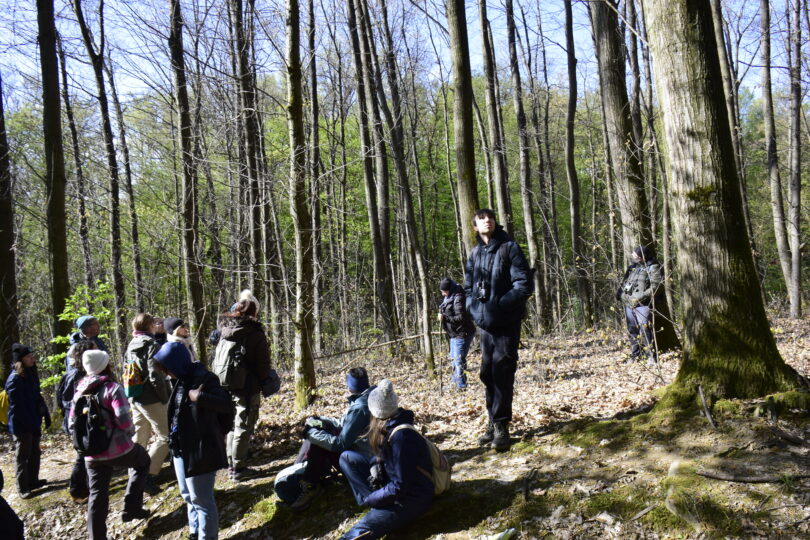
Switching from urban to rural areas, we visited Mala Mlaka, a settlement within the City of Zagreb characterized by agricultural and grassy areas. Here we were greeted by the recognizable calls of Pheasants and Cuckoos, but also species that will often be found perched on bushes in open areas, such as the Red-backed Shrike and the Great Bunting.
The first real excursion was a three-day tour of Pag and the Nin Salt Pans. The vast areas resembling rocky deserts, intersected by dry stone walls with the occasional lake in between, allowed us to see flocks of Glossy Ibises and identify almost every species of heron that we have in our books. Along the way, the Rock Partridge occasionally jumped out, each time delighting us with its colorful appearance. The melodious song of the Golden Oriole echoed through the groves of Pag, and after crossing to the Nin Salt Pans, we saw more curlews than we could recognize (even with the help of the book).
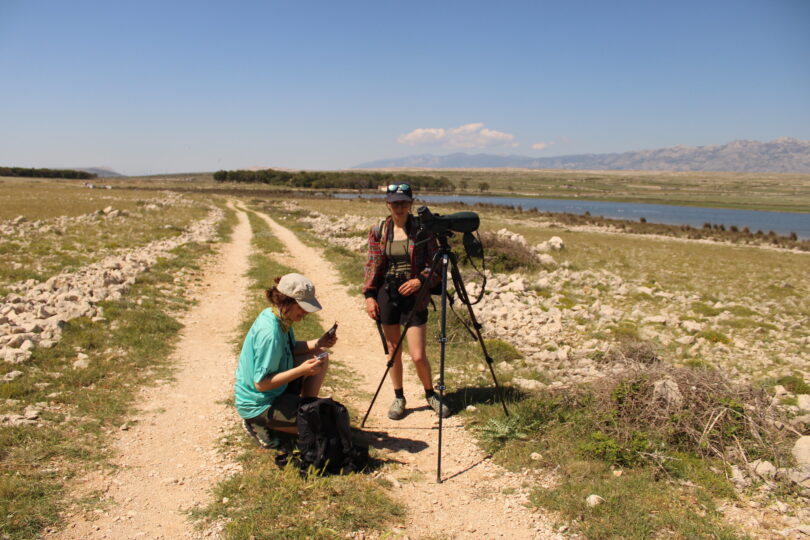
The fieldwork at the Blatnica pond came as a kind of exercise: an open water area surrounded by woods and agricultural areas; a bit of habitat for everyone. We were reminded of the songs of many songbirds, and finally saw a large flock of Long-tailed Tits. However, the stage here was taken over by a White-tailed Eagle that hovered sluggishly above the surface of the water, repeatedly giving us the opportunity to spot its recognizable massive beak. The voices of the reed warblers persistently puzzled us, until one appeared among the reeds, giving us the opportunity to put a face to the name.
We visited real forest habitats in Risnjak National Park and Učka Nature Park. Climbing to the top of Risnjak, we listened to woodpeckers and thrushes, and those who were lucky saw a Eurasian Treecreeper and a Nuthatch scurrying along the tree. In the midst of identifying the Goldcrest from the Firecrest, we were surprised by the call of a Bullfinch, even though it did not want to show itself.
Učka was a different story. As many already know, Biom organizes an educational ringing camp near the Rogozna pond on Učka; as participants of BirdID, we also got the opportunity to attend and gain a completely different experience of bird watching compared to before. Bird ringing requires the installation of special nets in which these birds would become entangled during their flights, after which experts untangle them and, through a careful process, mark them with a metal ring and record their measurements. Until now, we have usually observed birds from a greater distance, and in a very limited time, so this new method of observing the specificities of individual species from, literally, first hand, shed light on many ambiguities. The size of the Chiffchaff, the Blackcap and the Blackbird in relation to the hand that holds them remained sealed in our minds, and the slight differences in the shades of the plumage of seemingly similar birds became significantly clearer.
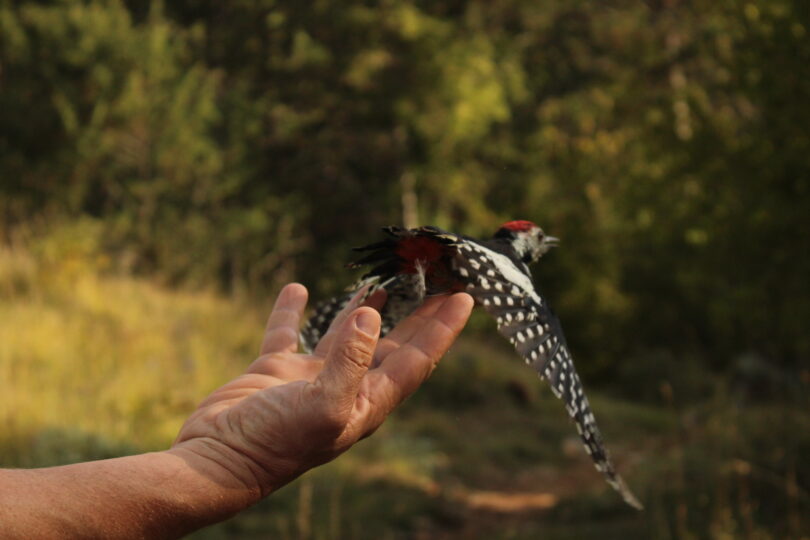
Even in these forests the pealing of woodpeckers echoed, but what was definitely new were the flights of Griffon Vultures over the camp in search of warm air currents. There is a feeding ground for Griffon Vultures on Učka, since they nest on the cliffs of the Kvarner bay, so these sightings were not rare. In addition to diurnal birds, we also caught nocturnal species in our nocturnal nets – the Scops Owl and the Nightjar. You can read more about this special camp in the text of my colleague, volunteer Lucie, who participated during the entire duration of the camp.
Učka was also the last field trip; this was followed by a couple of weeks of practice with our patient teachers, Iva and Vanja. With so much practical experience, the recognition tests slowly became easier and easier, and finally, passing the exam became more and more attainable. As Biom’s ESC volunteer, I was, of course, a little privileged compared to other participants. The opportunity to partake in the Birdwatching Festival in the Neretva Valley was a turning point for my bird recognition skills, given that the area, especially during the festival, attracts many birds on their migratory journey. On the other hand, the ringing camp on Lake Vransko was another opportunity for me to get up close and personal with many of the common species of the area, this time in a different habitat compared to Učka – full of Great Reed Warblers, Cetti’s Warblers, Penduline Tits, and other species of open wet habitats. Of course, the employees of Biom were indispensable in my learning process, always there for my questions, frustrations and regaining motivation after not being able to recognize the call of the Great Tit. Now all that’s left to question is, when all of this is over, how will I keep my gaze directed both downwards and upwards?