


The topic of infectious diseases in birds of prey has attracted significant interest from the professional community, as demonstrated at the first stakeholder workshop of the AVIATOR project – Avian Resilience and Adaptation through Awareness, Monitoring, Treatment, and Outreach for Raptors – held on 28 January in Zagreb. The workshop was organised by the association Biom and the Faculty of Veterinary Medicine of the University of Zagreb. The aim of the workshop was to present the project to key stakeholders and to encourage the exchange of knowledge and experience on the timely issue of infectious diseases in birds of prey.
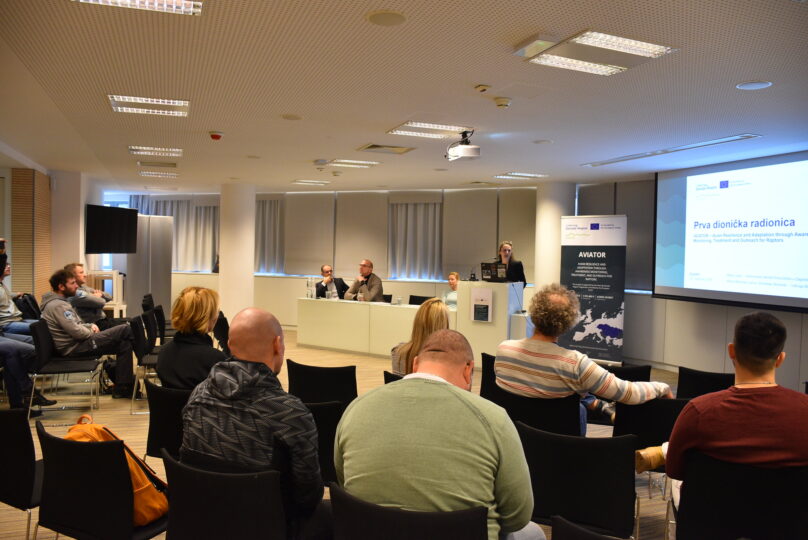
The AVIATOR project aims to strengthen the resilience and support the adaptation of raptor populations in the Danube region in the context of climate change, through the development and testing of coordinated and harmonised measures across transnational ecological regions.
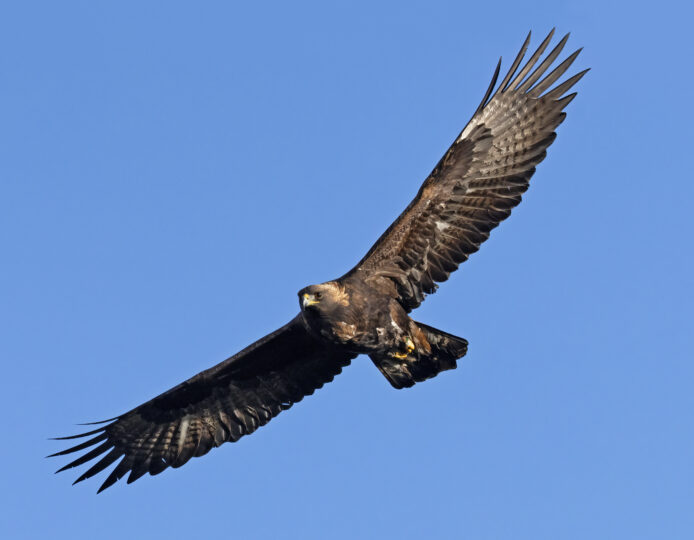
The Danube region, rich in diverse landscapes and ecosystems, is home to numerous wild bird species, including a large number of threatened raptor species. Major threats to their survival include habitat loss due to deforestation and agricultural activities, fragmentation of ecological corridors, changes in migration routes, as well as the spread of viral and parasitic diseases. The use of pesticides for mosquito control, although necessary, can have harmful effects on the health of birds of prey. Insufficient coordination between countries and the lack of systematic and joint monitoring further hinder effective conservation of these species.
Through pilot activities in Danube ecological regions, the project will test new models of vaccination and vector control in birds of prey. In addition, the project will develop a joint framework for threat analysis, assessment of the effectiveness of measures, and the establishment of a regional information-sharing system, with the aim of strengthening capacities for preserving the health and population sizes of birds of prey and contributing to the conservation of overall biodiversity.
The workshop was opened by Marija Martinko Ivanov, AVIATOR project coordinator from the association Biom, who thanked participants for their interest and highlighted the importance of cooperation between the veterinary sector and the nature conservation sector. This was followed by a brief presentation of the AVIATOR project by Assoc. Prof. Maja Lukač, PhD, from the Faculty of Veterinary Medicine of the University of Zagreb. A lecture entitled Emergence of Infectious Diseases and the One Health Approach was then delivered by Prof. Ljubo Barbić, PhD, from the Department of Microbiology and Infectious Diseases at the same faculty.
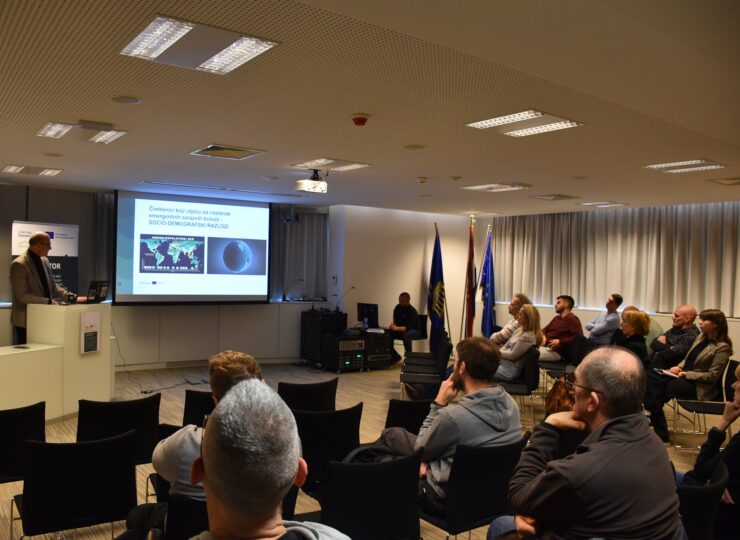
The final lecture, Research on West Nile Virus and Usutu Virus in Wild Birds (with a Focus on Raptors) in Croatia, was presented by Assoc. Prof. Vladimir Savić, PhD, from the Centre for Poultry Science of the Croatian Veterinary Institute. In the second part of the workshop, participants had the opportunity to share their experiences, network with one another, and propose ways of future involvement in the AVIATOR project.
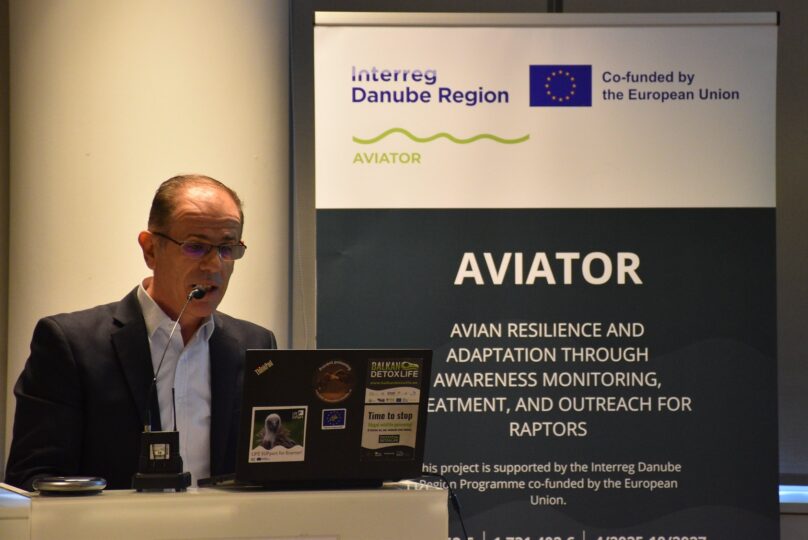
The AVIATOR project is funded by the Interreg Danube Programme and is being implemented from 1 April 2025 to 30 November 2027. The project brings together 13 institutions from 10 countries: Germany, Austria, Slovenia, Hungary, Serbia, Bosnia and Herzegovina, Montenegro, Bulgaria, Romania, and Croatia, where it is implemented by the association Biom and the Faculty of Veterinary Medicine of the University of Zagreb.

This project is supported by the Interreg Danube Region Programme co-funded by the European Union