

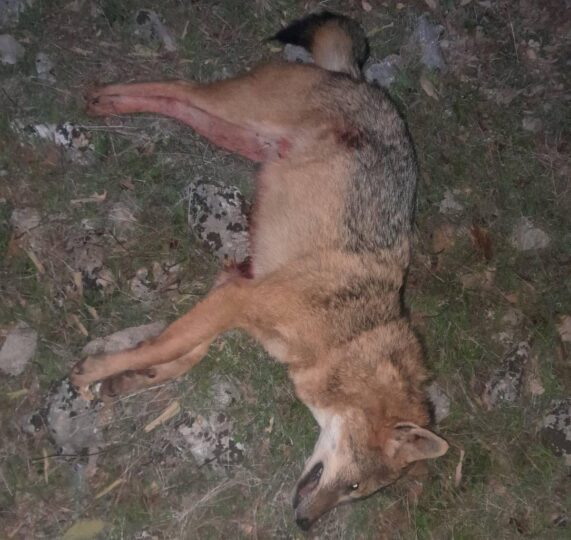
The first golden jackal culled on the island of Cres was recorded in November 2025, specifically in the hunting ground VIII/107 “Batajna–Hraste”, managed by the Pramenka Association. Although individuals of this species had been recorded over the past year through camera footage, this represents the first officially culled golden jackal on the island.
The appearance of the golden jackal and the potential establishment of a population on the island of Cres pose a serious threat to the survival of sheep farming on Croatia’s largest island. As the long-term survival and development of the Croatian population of Griffon Vultures is inseparably linked to extensive sheep farming, which provides the main natural food source for vultures, the LIFE SUPport project partnership is calling on all relevant institutions to react urgently in order to prevent the spread of this invasive species on Cres.
The first culled golden jackal on Cres is a clear warning signal.
“There were earlier reports of jackal culling on islands south of Cres (Lošinj and Ilovik), as well as photo-documented observations on Cres itself. We do not know whether it is already too late, but we believe that coordinated action should be taken to prevent a situation like the one that has affected sheep farmers on the island of Krk. It is essential to strengthen the engagement of the local hunting community, as hunting golden jackals is demanding and generally unattractive to hunters. Within the LIFE SUPport project, protective measures against jackals are currently being tested on the island of Krk, where this species is now abundant and causes enormous problems for sheep farmers, while until now wild boar were the only major issue on Cres. However, Cres is now facing a Krk-like scenario, which would expose Kvarner Griffon Vultures to additional threats,” emphasises Dubravko Dender from the Association Biom, project manager of LIFE SUPport.
According to research conducted within the LIFE SUPport project by Assistant Professor Marica Marinović Golubić, PhD, the number of wild boar and golden jackals on Krk has increased to such an extent that sheep farmers can no longer leave sheep and lambs unattended on open pastures under extensive farming conditions, as damage to flocks—particularly lambs—is extremely high. Extensive sheep grazing, i.e. keeping sheep outdoors, is crucial for Griffon Vultures, as sheep carcasses represent their primary food source on the Kvarner islands. Due to newly arrived species on the Kvarner islands, sheep farming today requires significantly higher investments than in the past, leading to declining interest among the local population in continuing this traditional activity.
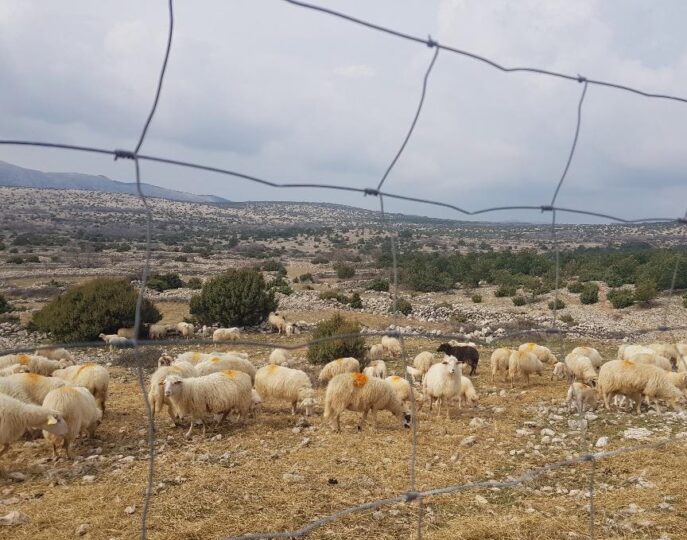
According to data from the Ministry of Agriculture, Forestry and Fisheries, the number of sheep has decreased by 15% since 2011. Of the 32,000 sheep recorded in 2011 on the islands of Krk, Cres, Lošinj and Rab, only 27,000 were recorded in 2023—a decline of 5,000 animals over 12 years. At this rate, the number of sheep on these islands will be reduced by more than half within the next 20 years.
Bojan Marković, a member of the LIFE SUPport Advisory Board and Secretary of the Hunting Association of Primorje–Gorski Kotar County, notes that during 2025, 80 golden jackals were culled on Krk, and a total of 200 individuals across the county, many of them in the vicinity of Novi Vinodolski.
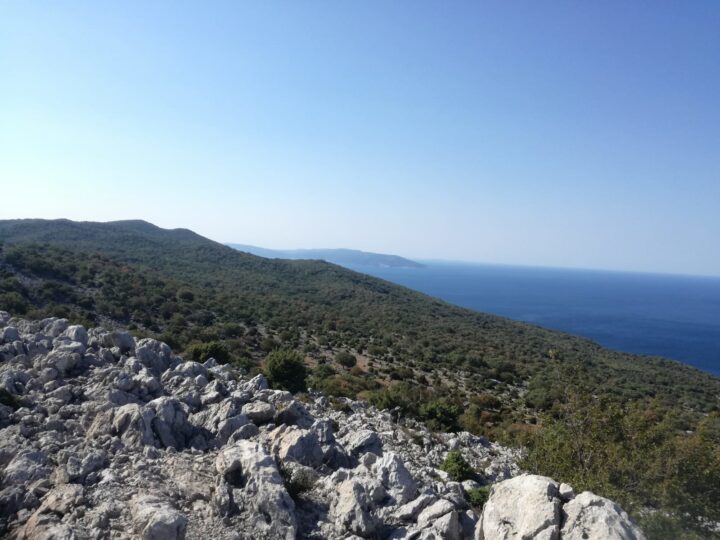
The City of Cres has stated that it can confidently conclude that the appearance of the golden jackal represents the most serious challenge traditional extensive sheep farming has faced so far. “Given the configuration of the pastures, unresolved land ownership issues and the small number of farmers, it is unrealistic to expect a significant increase in cleared pasture areas in the coming years that would limit the areas where jackals can persist. All sightings so far have been recorded in overgrown and difficult-to-access terrain,” stated the Mayor of Cres, Marin Gregorović, in his official response.
Through public calls for agricultural associations, the City of Cres allocates substantial budget funds to the sheep-farming and hunting association Pramenka and the hunting society Orebica, most often for the construction or maintenance of roads in hunting areas. In cooperation with Primorje–Gorski Kotar County, equipment has also been donated to these hunting concession holders, including mobile hunting cameras and portable hunting stands, with the obligation that they be actively used.
During several working meetings held at the City of Cres, hunting concession holders were invited to submit proposals on how the City could assist in jackal removal. However, the fact remains that hunting golden jackals is challenging and depends largely on the motivation of individual hunters. Based on experiences from Krk, the City of Cres has not yet considered co-financing or rewarding the culling of individual jackals, due to the high risk of abuse of such measures. Nevertheless, the City remains open to all proposals from hunting concession holders, including the potential co-financing of thermal imaging equipment that could facilitate jackal hunting.
As part of the LIFE SUPport project, the Association Biom organised a lecture in March 2025 in which Professor Vedran Slijepčević from the Department of Hunting and Nature Conservation at the Karlovac University of Applied Sciences—an experienced golden jackal hunter—presented detailed information on the biology and hunting of the species. Interested hunters from the island of Cres participated in the lecture and subsequent discussion, during which examples of jackal calling techniques were also presented.
“Given the adaptability and intelligence of this species, as well as the vegetation cover of the island of Cres, there is still a possibility—through an exceptional level of hunting effort—to stop its spread at the very beginning, this year, while the number of individuals is still low. If successful reproduction and population growth occur in this and subsequent years, with the formation of multiple packs, eradication will no longer be feasible, and sheep farming on Cres will never be the same,” stresses Vedran Slijepčević.
The Pramenka Sheep Breeders’ Association, which operates on Cres, stated in response to an inquiry that it has not independently undertaken measures against the golden jackal. Representatives of the association have participated in meetings held by the City of Cres and have expressed willingness to cooperate in further actions to preserve sheep farming and Griffon Vultures on the island.
The golden jackal problem is also pronounced in the Kornati National Park, where the Public Institution managing the park invests significant resources in jackal removal in order to preserve livestock farming.
Extensive sheep farming on the islands developed uninterrupted precisely due to the absence of predators. Under such favourable conditions, sheep on Kornati and the Kvarner islands were traditionally neither guarded nor fenced. With the arrival of predators, additional investments have become necessary, and under such circumstances people are more likely to abandon sheep farming and turn to tourism or other activities, as they are unwilling to invest in an activity that already yields limited profit.
The LIFE SUPport Advisory Board concluded that efforts to address the golden jackal problem on Cres should be intensified while the number of individuals is still low, and that a meeting should be organised with the Livestock Directorate and the Hunting Directorate, with support from the Ministry of Environmental Protection and Green Transition.
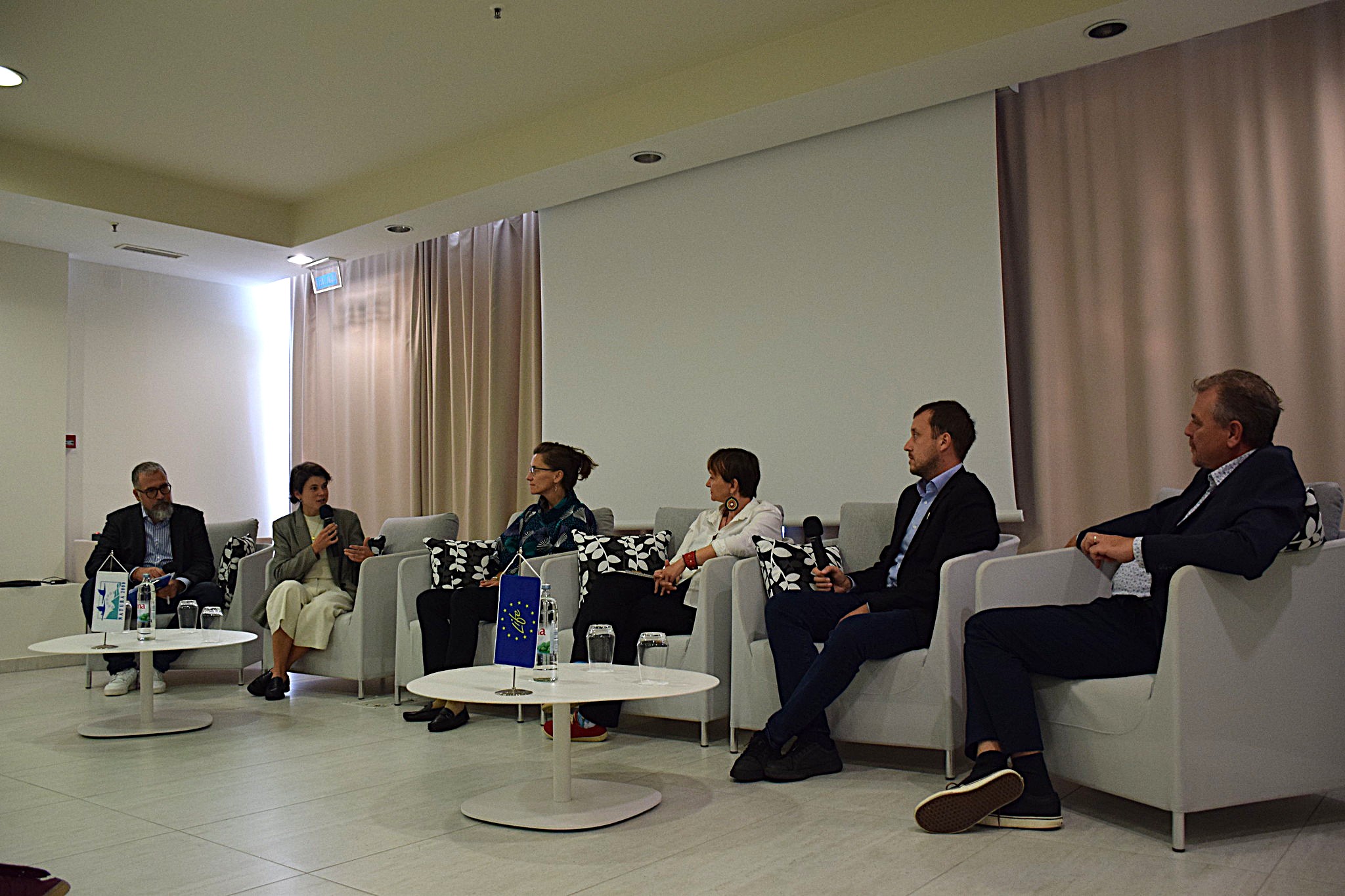
The LIFE SUPport Advisory Board consists of representatives of project partner organisations (Association Biom, Vulture Conservation Foundation, Municipality of Baška, Baška Ltd., HEP ODS and the Nature Protection Directorate of the Ministry of Environmental Protection and Green Transition), as well as Bojan Marković (Hunting Association of Primorje–Gorski Kotar County), Gordana Gorupić Šarić and her deputy Lahorka Pejić (Directorate for Agricultural and Rural Development Support, Ministry of Agriculture), Ramona Topić (Institute for Environment and Nature Protection, Ministry of Environmental Protection and Green Transition), Ivica Medarić (Croatian Forests Ltd. – Forest Administration Senj) and Vlatka Tomašić (Ministry of Agriculture – Directorate for Veterinary and Food Safety).