


Full project title:
Preserving wet meadows for birds and plants at Lake Vrana
Duration:
November 2018 – May 2020
Total budget:
25.582,00 €
Association Biom budget:
EuroNatur foundation: 24.282,00€
Lead beneficiary:
Association Biom
Project partners:
Public Institution Nature Park Vransko Lake
Project goals
Restoration and maintenance of wet meadows in the Lake Vrana Nature Park, with a focus on restoring their ecological functions important for bird species
Development of a wet meadow management plan for the Lake Vrana Nature Park area
Introduction of sustainable wet meadow management by encouraging cooperation with stakeholders and volunteers
Project summary
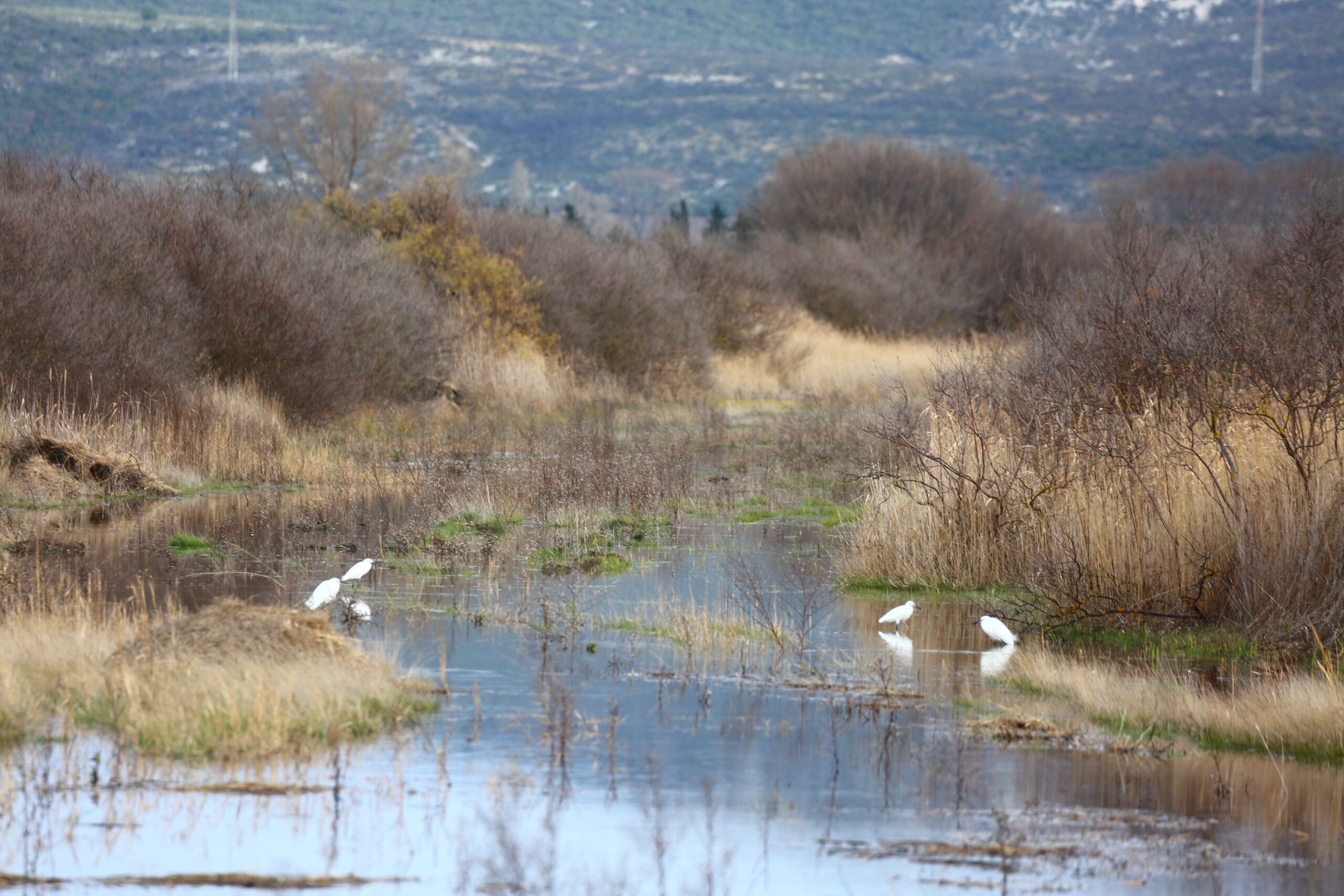
Lake Vrana is one of the largest wetland areas on the eastern Adriatic coast and is of exceptional importance for biodiversity, serving as a wintering ground for numerous species of rare and endangered birds, as well as being home to rare habitats such as reed beds, muddy shores, and floodplain meadows.
Wet meadows are a rare habitat type in the Mediterranean, including within the Lake Vrana area itself, which is predominantly characterised by freshwater habitats, reed beds, and thickets.
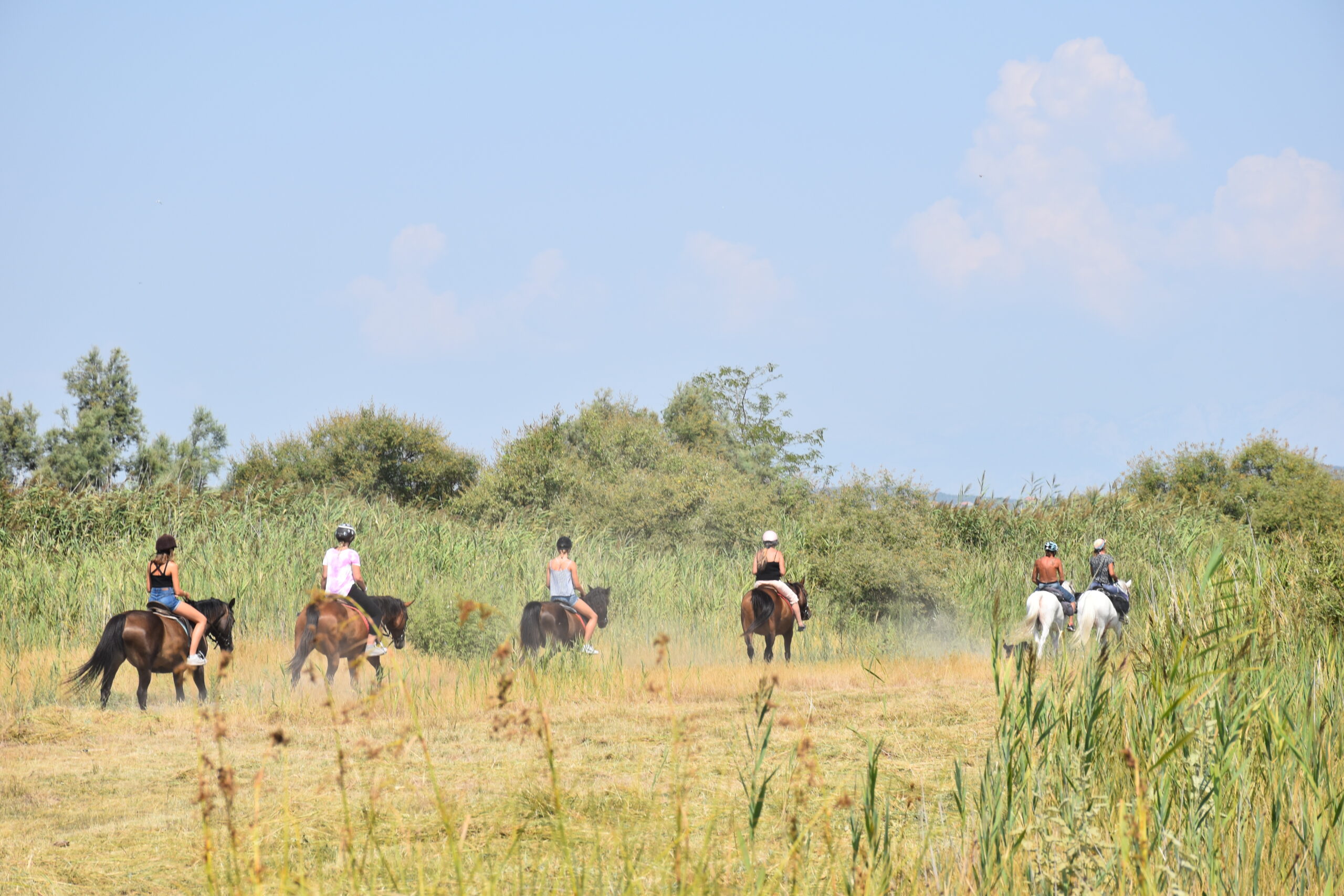
The greatest threat to the preservation of wet meadows is their overgrowth with reeds and various woody vegetation (such as chaste tree, spiny broom, and tamarisk). With the decline of traditional livestock farming, which once maintained the area through regular grazing, the process of natural succession has accelerated. Livestock farming is a traditional activity and one of the most effective methods for preserving grasslands and their biodiversity. Although livestock is no longer present, horse-riding tours around the lake are a common sight during the summer months.
The aim of the project “Preserving wet meadows for birds and plants at Lake Vrana” is to restore the wet meadows and reinstate their ecological functions, which contribute significantly to biological diversity.
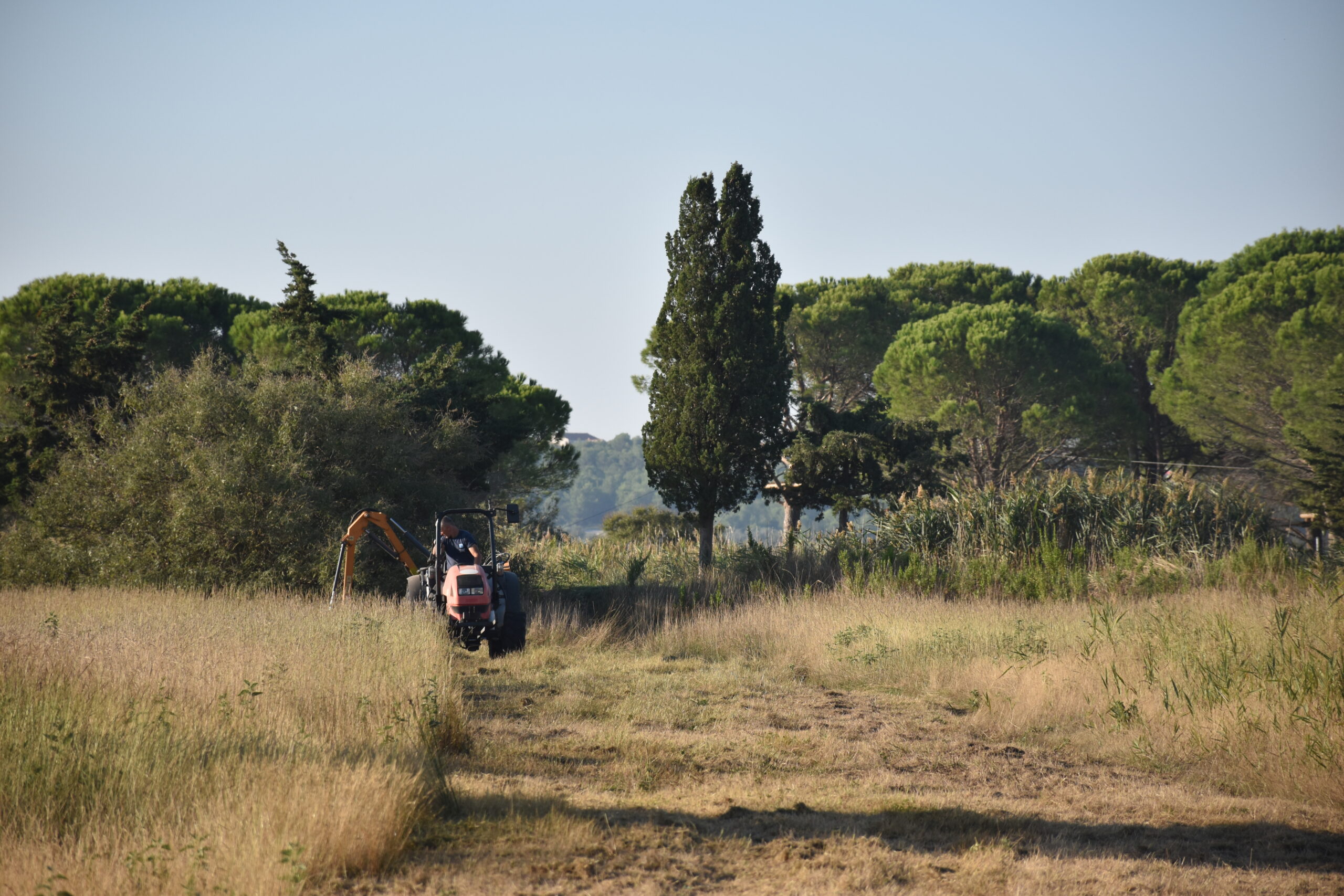
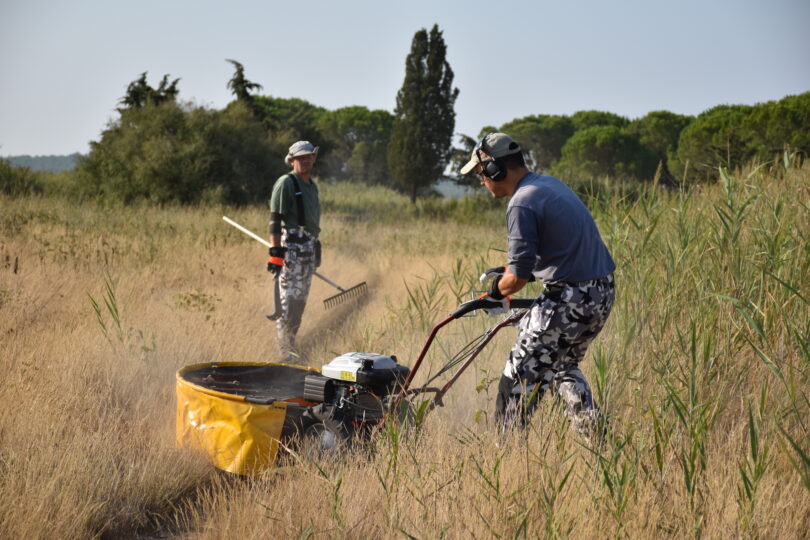
Overgrowth has been managed through late-season mowing, which not only controls the spread of unwanted vegetation such as young reeds and shrubs but also helps expand the area of open meadow. This approach allows for the natural reseeding of existing plant species, supports their long-term survival in the habitat, and avoids disturbing migratory birds that most frequently use the meadows during spring and autumn migrations.
The most significant plant species identified in the area is Chouardia litardierei, and the project aims to increase the size of its potential habitat and the number of individuals over the long term. During the implementation of the project, Allium telmatum, a species of wild garlic first described in 2009 and known from only a few locations in Northern Dalmatia, was also recognised as significant. Mowing practices have since been adapted to avoid harming this species by carefully navigating around individual plants.
To ensure long-term management, a wet meadow management plan for Lake Vrana has been developed based on restoration experience gained through the project. This management plan outlines not only restoration activities but also supporting measures, including local community engagement and cooperation with local livestock farmers to help preserve this important habitat.
Materials and publications
View


Project implementation was funded by EuroNatur foundation and Public institution Nature park Vransko lake.