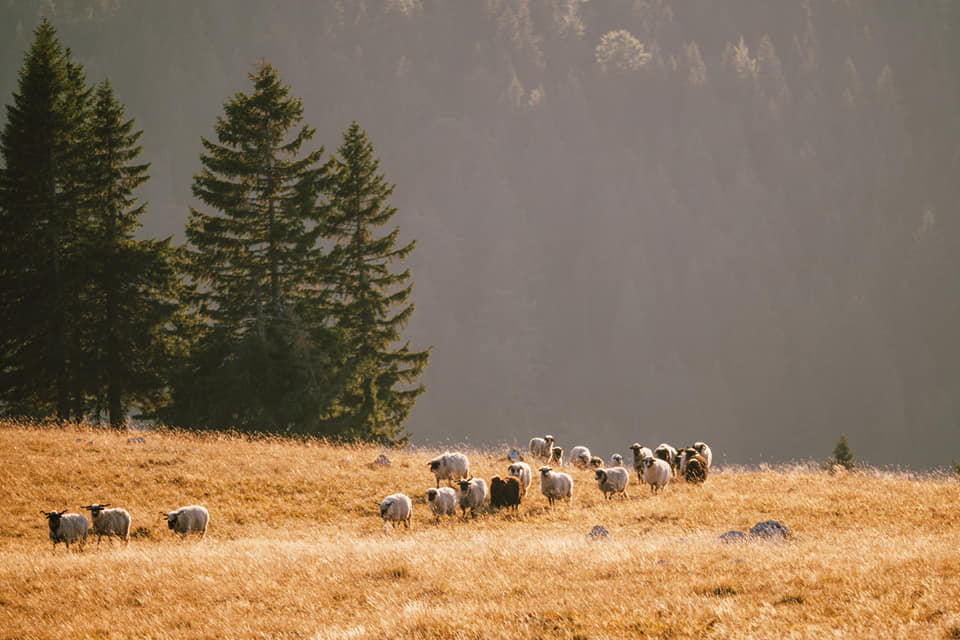


The Mediterranean mosaic landscape was shaped over thousands of years through the presence of people and their livestock in the karst region — a unique combination of grasslands, forests, shrublands, agricultural areas, and settlements. This landscape is not only aesthetically valuable but also naturally more resilient to drought, wildfires, and extreme weather events. It represents a blend of cultural heritage and exceptional biological diversity, both increasingly threatened by the decline of traditional agriculture and livestock grazing, which has led to the overgrowth of grasslands.
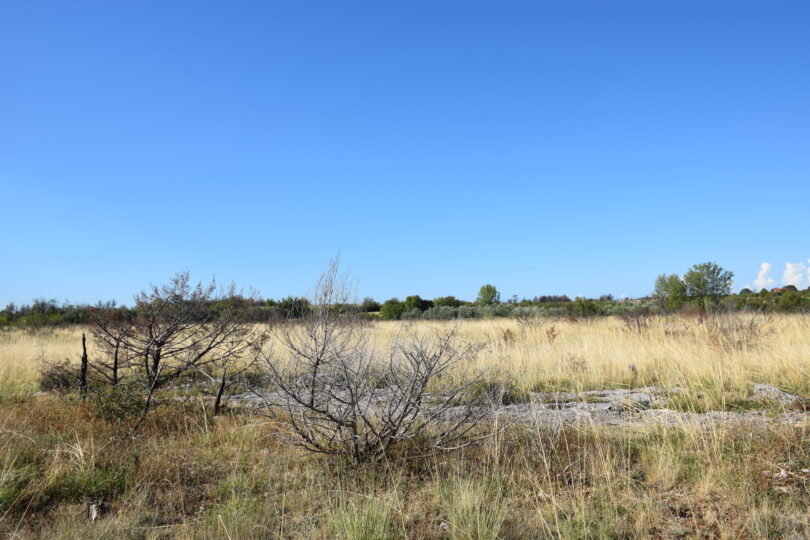
This unique natural heritage is the focus of the five-year “Mosaic of LIFE” project, launched by Association Biom together with its partners.
Over the next five years, Mosaic of LIFE will implement restoration activities on at least 560 hectares of grasslands and improve management on an additional 1,020 hectares. Habitat restoration includes mechanical removal of woody vegetation, controlled burning under expert supervision, and — most importantly — promoting traditional grazing practices, as it was precisely livestock grazing over the centuries that shaped and maintained this distinctive landscape.
In addition to conserving target grassland habitat types and associated bird species in the Split-Dalmatia and Šibenik-Knin counties, the project aims to increase the number of breeding pairs of four target bird species within eight Natura 2000 sites. At the same time, the project focuses on preserving the mosaic landscape and increasing its resilience to climate change through nature-based solutions, as well as promoting traditional agricultural practices and EU policies that help address current challenges.
A special emphasis is placed on empowering livestock breeders, decision-makers, and other stakeholders in the conservation of target grassland habitats within the Natura 2000 network and the species that depend on them. This will be achieved by improving the economic sustainability of traditional extensive agriculture and strengthening resilience to climate change. Ultimately, the project aims to increase public awareness of the importance of preserving the mosaic landscape, target habitats, and associated species, while promoting traditional agricultural practices and EU policies that contribute to long-term nature conservation and addressing existing challenges. These efforts are expected to improve the conservation status of the target habitats and bird species and increase the landscape’s resilience to climate change. Mosaic landscapes, which combine diverse habitat types and land uses, are naturally more resistant to climatic extremes. Therefore, the project will develop Recommendations for the Conservation of Landscape Mosaic Structure, which will be integrated into official Natura 2000 management plans, ensuring long-term sustainability through regional spatial planning and land management.
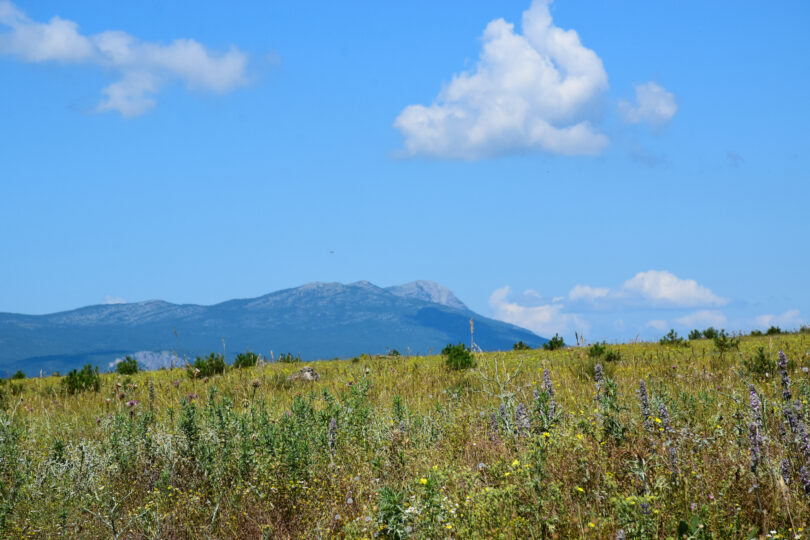
The Mosaic of LIFE project focuses on conserving four Natura 2000 target bird species: the Eurasian stone-curlew (Burhinus oedicnemus), the greater short-toed lark (Calandrella brachydactyla), the calandra lark (Melanocorypha calandra), and the tawny pipit (Anthus campestris). Through planned measures, a significant increase in the number of breeding pairs of these four bird species is expected, along with an overall improvement in the conservation status of grassland habitats and the species that depend on them. The project also aims to strengthen the economic viability of traditional extensive grazing and enhance the climate resilience of local farming communities. Mosaic of LIFE thus continues and expands the activities initiated under the Dinara back to LIFE project, transferring acquired knowledge and best practices to a wider region of central Dalmatia.
In addition to Association Biom as the project lead, project partners include the “Krka” Knin Ecological Association, the University of Zagreb Faculty of Agriculture, the Krka National Park Public Institution, and the Firefighting Association of Split-Dalmatia County. Associated partners include the Ministry of Environmental Protection and Green Transition – Institute for Environmental and Nature Protection, the Ministry of Agriculture, Forestry and Fisheries, the Public Institution More i krš, and the Public Institution Priroda of Šibenik-Knin County. The aim is also to involve local farmers, foresters, livestock breeders, firefighters, hikers, public institutions, and other interested stakeholders, encouraging cooperation and ensuring continuity of restoration activities beyond the duration of the project.
With Mosaic of LIFE, we aim to demonstrate that nature conservation can be in balance with human activity. Traditional grazing, which has shaped this landscape for centuries, is now becoming a tool for its restoration and preservation.
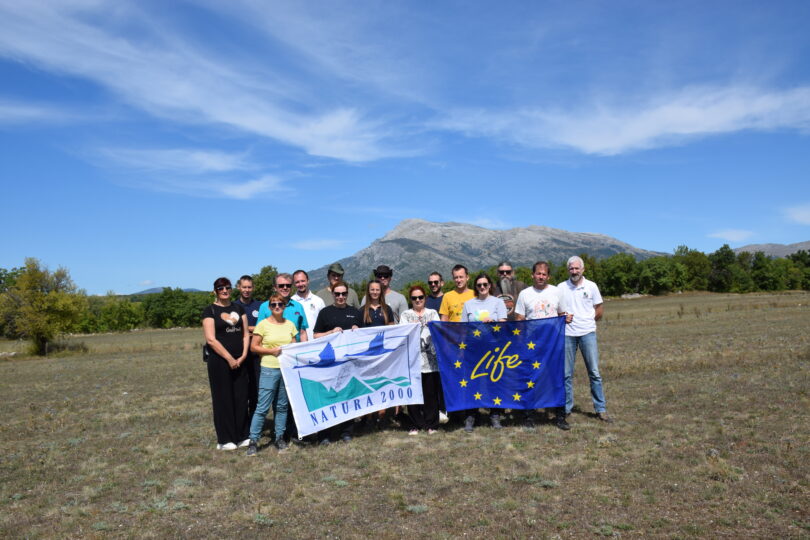
The Mosaic of LIFE project is valued at €4,850,315.57 and is co-funded by the EU LIFE Programme, the Office for NGOs of the Government of the Republic of Croatia, and the Environmental Protection and Energy Efficiency Fund. The project is implemented by the Association Biom (project coordinator), the “Krka” Knin Ecological Association, the University of Zagreb Faculty of Agriculture, the Krka National Park Public Institution, and the Firefighting Association of Split-Dalmatia County, while associated partners include the Ministry of Environmental Protection and Green Transition – Institute for Environmental and Nature Protection, the Ministry of Agriculture, Forestry and Fisheries, the Public Institution More i krš, and the Public Institution Priroda of Šibenik-Knin County.