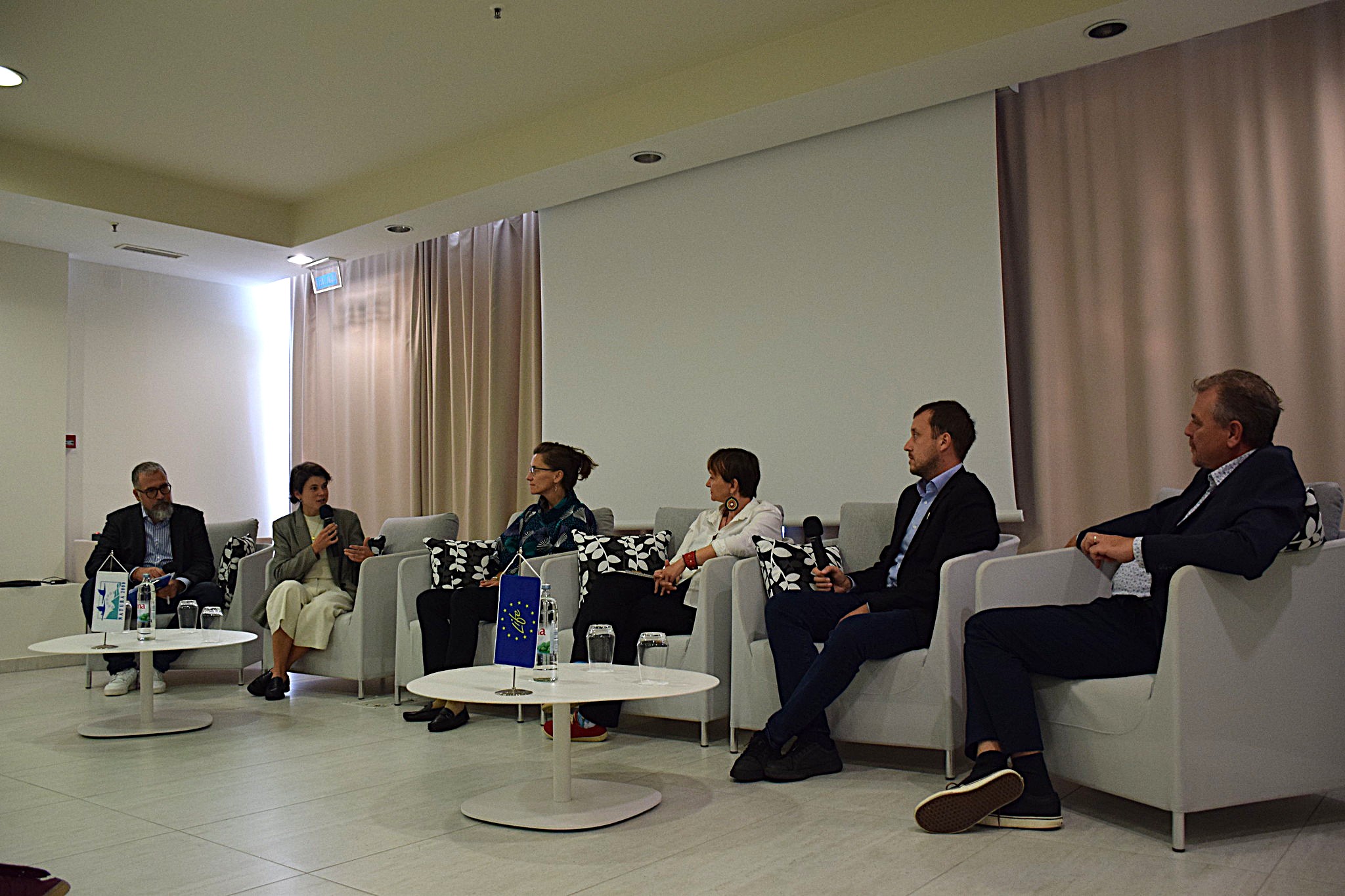


Nature restoration will not succeed without farmers, but only together with them. This was one of the key messages of the panel discussion “National Nature Restoration Plan and the Future of Agriculture after 2027”, held yesterday in Šibenik. Climate change is already altering the conditions in which food is produced, while the success of future nature restoration measures will depend on whether farmers are recognised as partners and whether adequate funding is secured for their implementation.
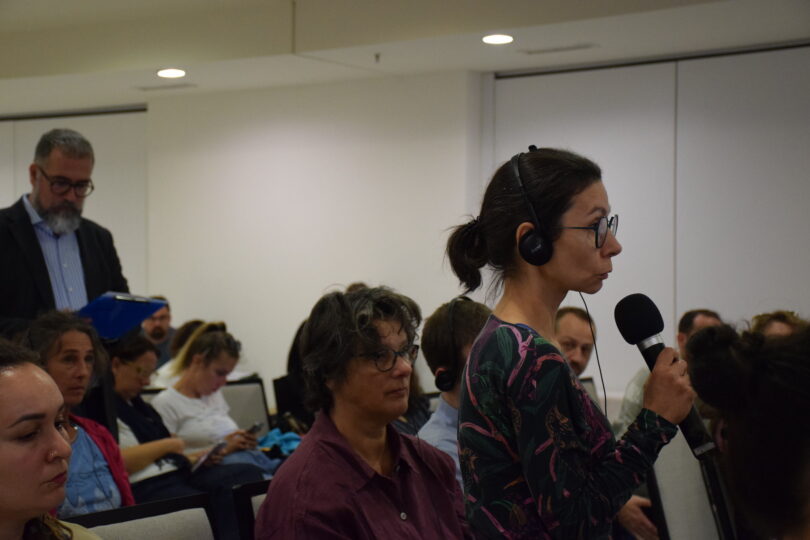
The panel brought together Tamara Čimbora Zovko from the Croatian Ministry of Environmental Protection and Green Transition, Anouk Puymartin from BirdLife Europe and Central Asia, Iris Beneš, President of the Brod Ecological Society, Associate Professor Hrvoje Kutnjak from the University of Zagreb Faculty of Agriculture, and Tomislav Hudina from Biom. The discussion was moderated by journalist Domagoj Novokmet.
One of the central themes was the need to stop viewing nature protection and restoration as an obstacle to agricultural production. Healthy soil, access to water, pollinators and healthy ecosystems are essential for food production, while climate change is already forcing agriculture to adapt.
“If we do not preserve the soil, we will have nothing to sow into. If we do not preserve clean water, we will have nothing to drink or use for irrigation,” warned Iris Beneš, President of the Brod Ecological Society. She pointed out that European nature protection policies are often portrayed in public debate as something imposed on Croatia by the European Commission, although they are in fact about protecting the country’s own natural resources.
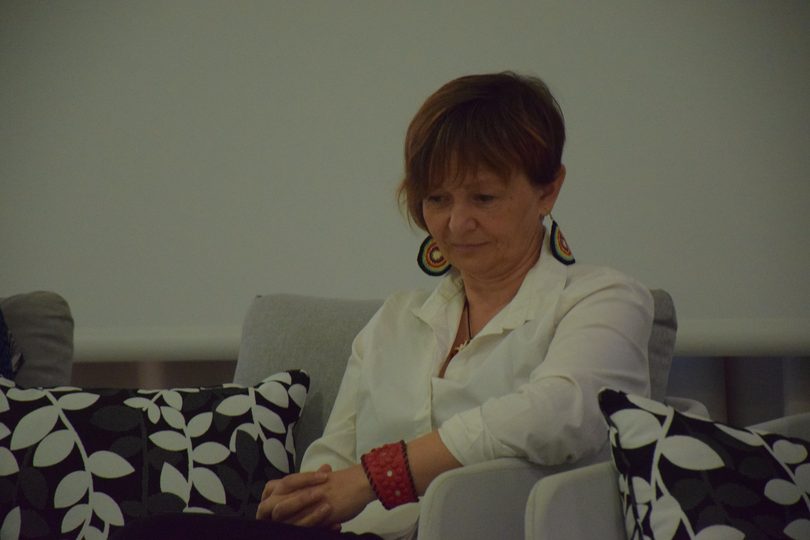
“We need to show respect to farmers as the people who put food on our tables, and we should not automatically regard them as enemies of nature conservation,” Beneš said.
Biom’s experience in the field also shows that relations with farmers need to be based on cooperation rather than simply imposing restrictions. Tomislav Hudina, Head of Biom’s Habitats and Botany Programme, stressed that nature conservation, agriculture, forestry, tourism and other sectors all use the same space and resources, and that sustainable solutions cannot be found if each sector acts in isolation.
“We need to sit down together and find a solution that benefits all of us. Humans are an inseparable part of nature,” Hudina said.
As an example of the importance of such an approach, he shared an experience from discussions with farmers during Biom’s projects.
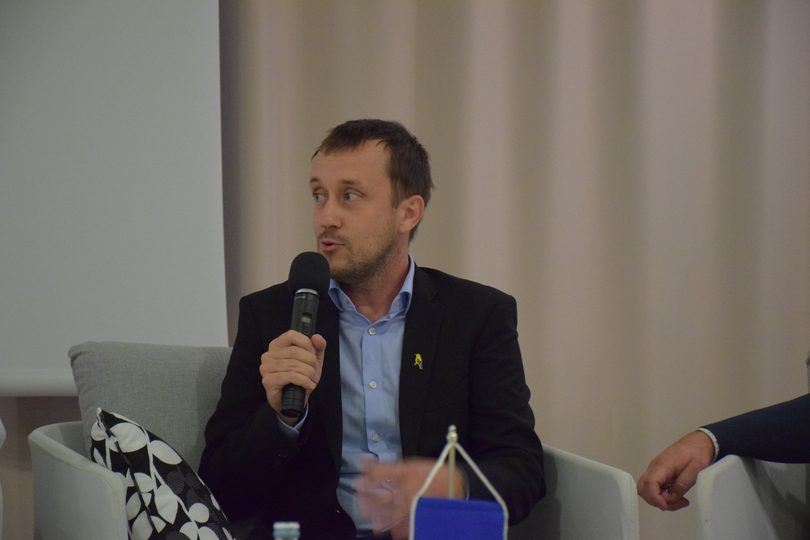
“One farmer told us: ‘You are the first people in 30 years who have come here and did not start the conversation by banning something, but instead gave us the opportunity to tell you what is troubling us and what we need.’ This is exactly the approach we are trying to take when planning nature restoration – listening to what people need and looking for solutions that work both for nature and for the people whose livelihoods depend on these areas,” Hudina said.
Climate change, meanwhile, is no longer a problem of the distant future. Associate Professor Hrvoje Kutnjak from the University of Zagreb Faculty of Agriculture warned of increasingly prolonged heatwaves, droughts and changing precipitation patterns. In continental agricultural areas, temperatures above 35°C can bring photosynthesis to a halt even where irrigation is available, while existing production systems are not yet adapted to such conditions.
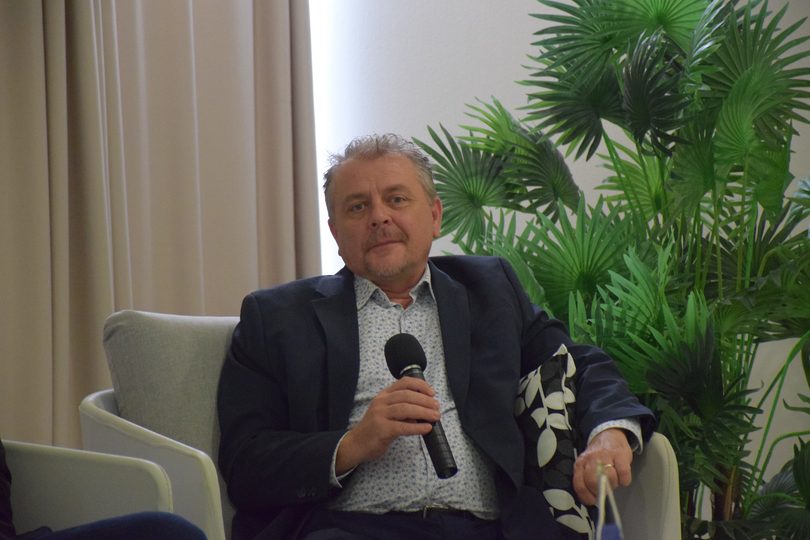
These changes will therefore require not only new technologies, but potentially changes in the crops that are grown. In the long term, Kutnjak believes that agriculture itself can become an important part of the solution.
“I hope that in the future agriculture will become a tool for protecting nature and the environment,” Kutnjak said, noting that many valuable cultural landscapes were created through agricultural activity and that common ground needs to be found between modern agriculture and nature conservation.
Croatia is currently preparing its National Nature Restoration Plan, which will set out how the EU Nature Restoration Regulation will be implemented in practice. Tamara Čimbora Zovko, PhD, Senior Adviser at the Ministry of Environmental Protection and Green Transition, stressed that nature and healthy ecosystems cannot be separated from the future of agriculture.
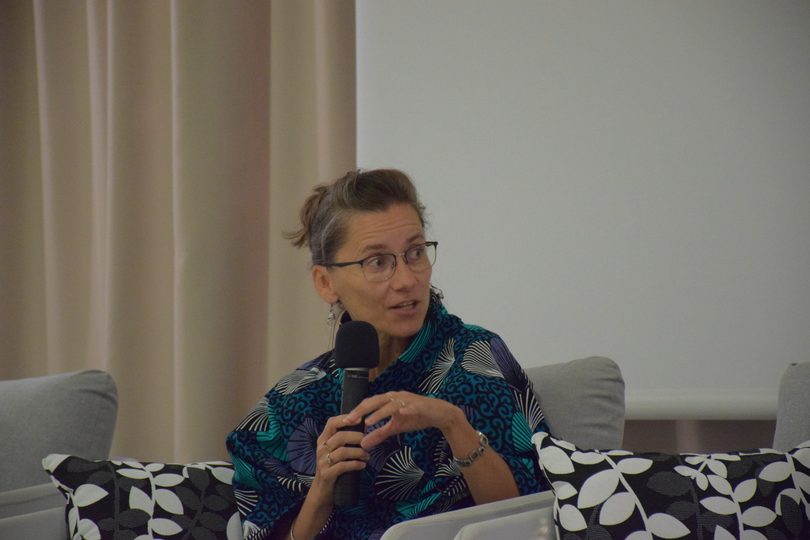
“Agriculture is inseparably linked to nature and the services provided by resilient ecosystems, and we already need to be working towards sustainable agriculture for the future,” Čimbora Zovko said, also highlighting the importance of wild pollinator populations for food production.
Croatia is expected to have its final National Nature Restoration Plan in place by 1 September 2027, although some restoration measures and projects, including those related to agricultural ecosystems, are already being implemented. Planning does not stop at 2030, but also includes a longer-term perspective towards 2040 and 2050.
One of the key questions that remains open is how nature restoration will be financed after 2027, given the ongoing negotiations on the European Union’s next Multiannual Financial Framework.
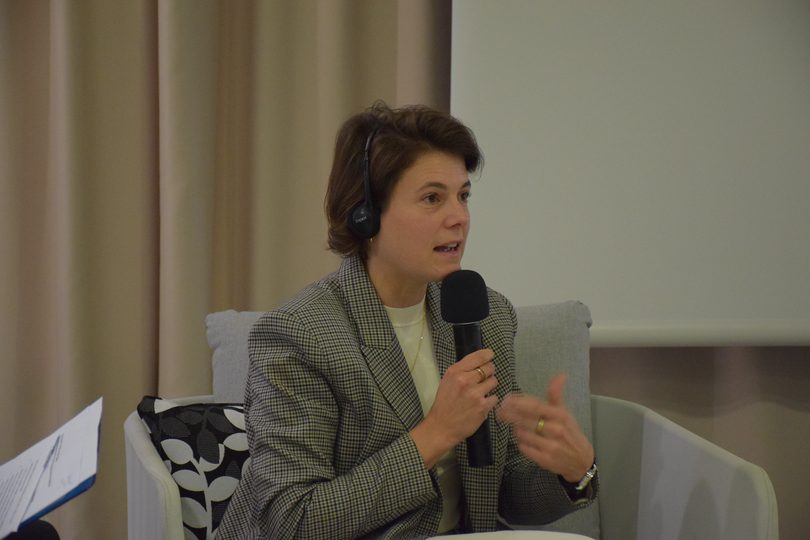
Anouk Puymartin, Head of Policy at BirdLife Europe and Central Asia, stressed that National Nature Restoration Plans provide an opportunity to move away from the current siloed approach and to better connect agricultural, nature conservation and other policies. She warned that the climate crisis is already having major economic consequences, with agriculture among the sectors most exposed to its impacts.
Speaking about negotiations on the future EU budget and the place of nature in European policies after 2027, Puymartin concluded that this represents “a historic opportunity that we cannot afford to miss.”
The discussion showed that adopting a National Nature Restoration Plan will not be enough in itself. Achieving its objectives will require long-term funding, adequate professional capacity and better communication with the people who will be implementing measures on the ground. Farmers cannot be treated merely as recipients of subsidies or as the subjects of new rules, but must be partners, without whom nature restoration in agricultural landscapes will not be possible.
The future of Croatian agriculture and the future of Croatia’s natural environment are therefore not two separate issues: responses to climate change, safeguarding food production and restoring degraded ecosystems will have to be developed together.