

Full project title:
Volunteer for Nature 2024
Project code: 2023-1-HR01-ESC51-VTJ-000140524
Duration:
01/12/2023 – 28/02/2025
Total budget: 43 071,00 €
Association Biom budget:
Agency for Mobility and EU Programmes:
43 071,00 €
Lead partner:
Association Biom
Partners:
Public institution „Priroda“ (Croatia)
Aarde-Werk de Stegge SE (Netherlands)
Parcours le Monde – Sud Ouest (France)
Sağlam Düşüncə Gənclər Təşkilatı İctimai Birliyi (Azerbaijan)
Asociacion Juvenil Intercambia (Spain)
Contact:
Đina Nola, djina.nola@biom.hr, project lead
Project goals
To monitor the state of nature components and implement conservation measures, including restoring natural ecosystems, with the goal of preserving biodiversity and our natural heritage for future generations.
To build a generation of conservation leaders who are able to take the initiative and become change makers in their communities.
To increase general public’s understanding of and involvement in nature protection.
Project summary
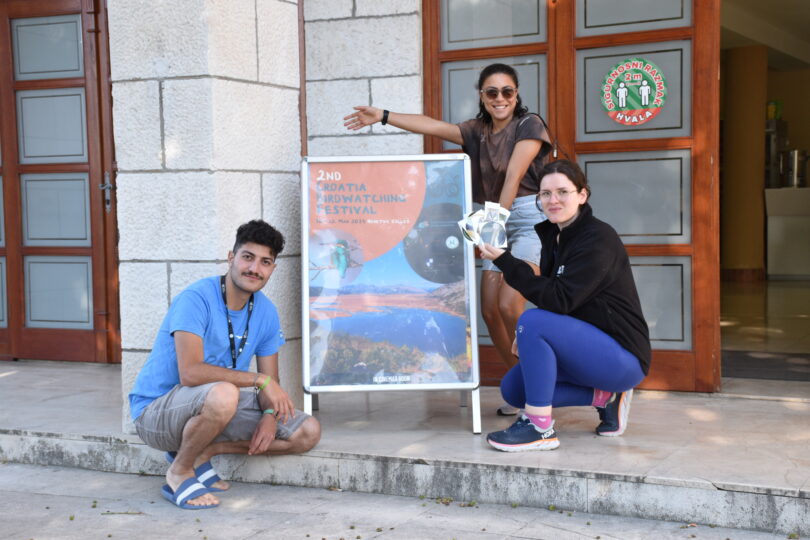
In 2024, four young people from France, Netherlands, Azerbaijan and Spain joined Biom for a 10-month European Solidarity Corps volunteering. As a part of the project Volunteer for Nature 2024, they contributed to a wide range of tasks that combined direct conservation work, public outreach, and personal development – carried out across various locations in Croatia, including Lastovo Islands Nature Park, Vis Archipelago, island of Cres, Učka Nature Park and the city of Zagreb.
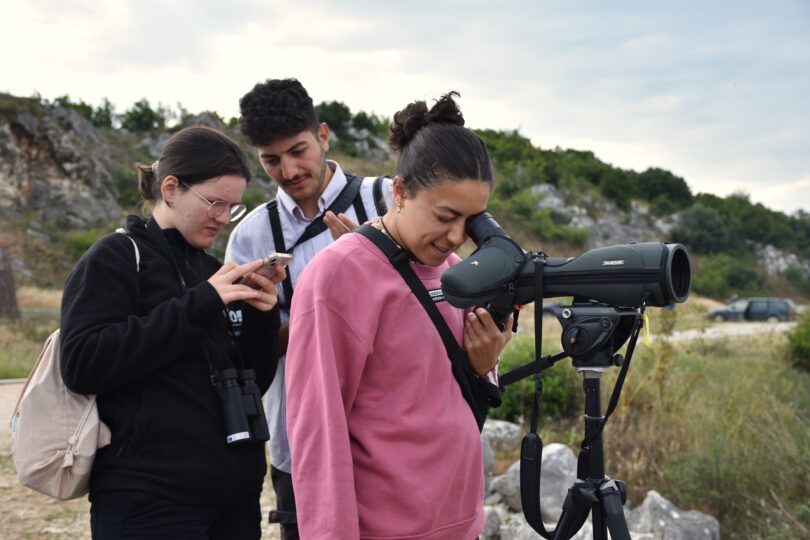
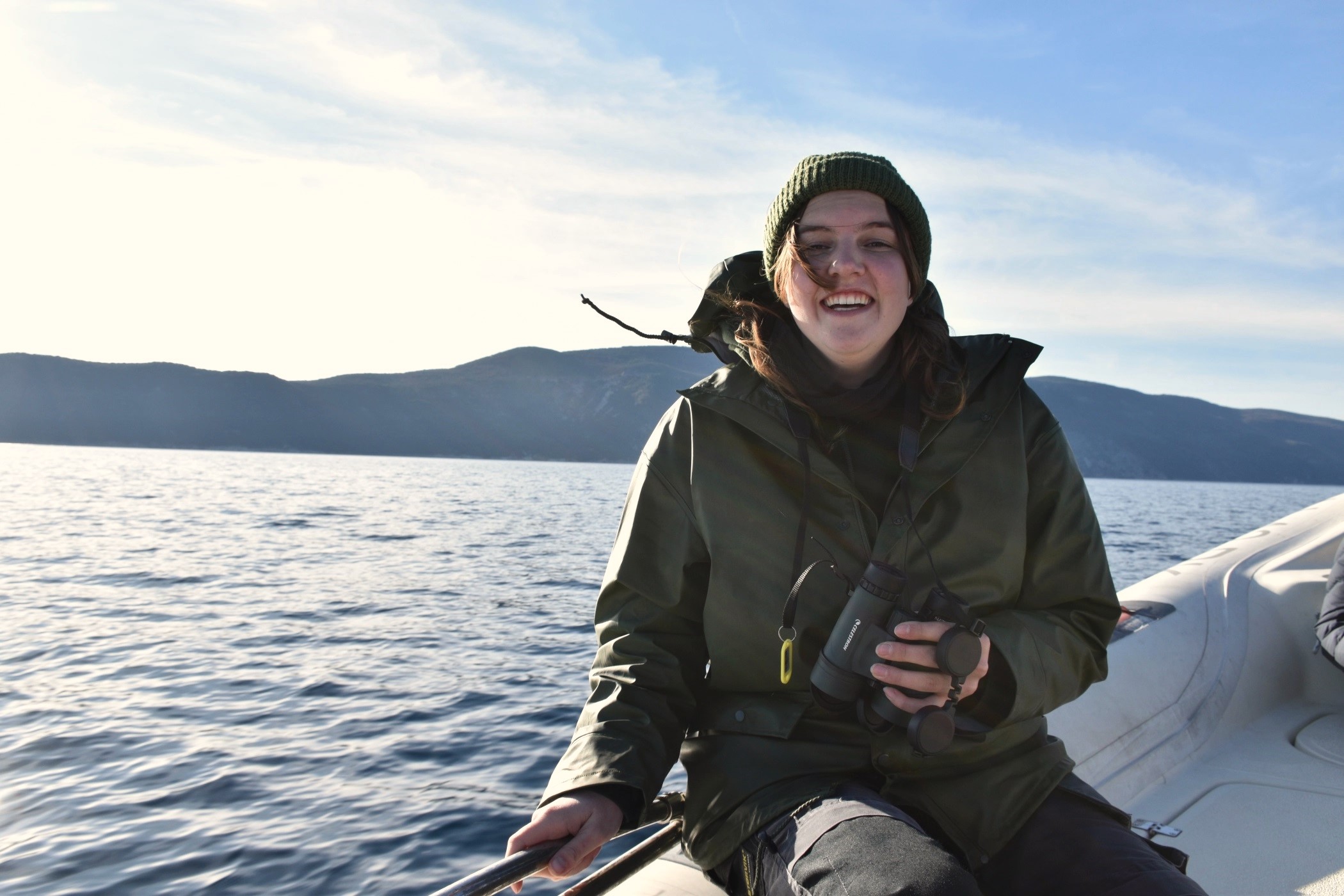
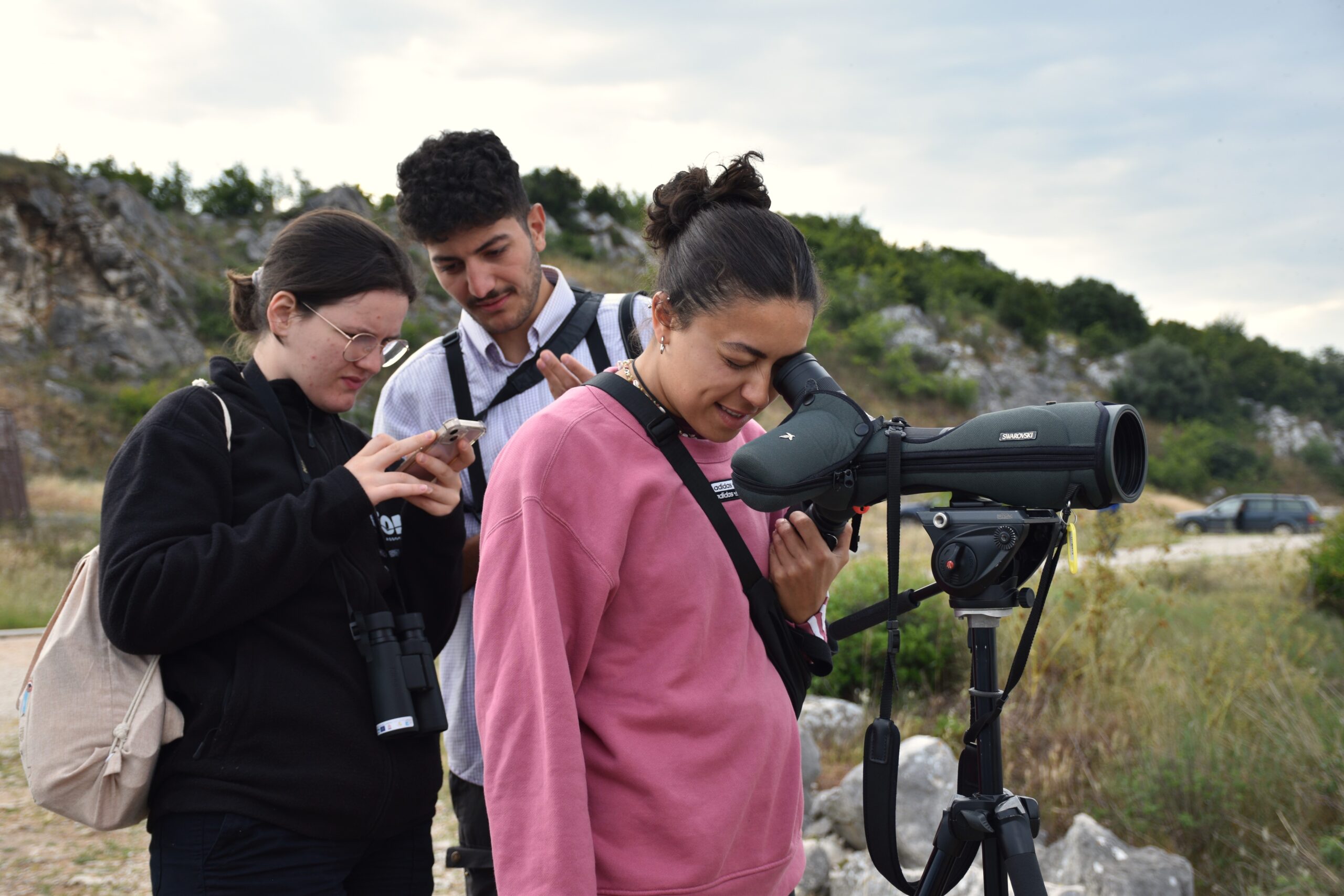
One of the key areas of engagement was field research and the implementation of conservation measures. The volunteers were assisting with field studies of birds, including endangered species, following scientific methodologies in protected areas of Croatia. They contributed to monitoring of sea birds and removal of invasive species on Lastovo Islands and Vis Archipelago.They also helped with entering data, which was later analysed by experts and served to make conservation recommendations or measure the success of implemented actions. Some of the volunteers were included in the data analysis themselves. As part of their experience at the Ornithological Camp Učka, volunteers had the opportunity to learn about small migratory bird ringing. They spent their summer months in Beli Visitor Centre and Rescue Centre for Griffon Vultures, where they engaged in Griffon vulture rescue and rehabilitation operations, which are crucial for preserving the last remaining Griffon vulture colony in Croatia. Additionally, participants carried out citizen science fieldwork, including monitoring of bird-glass collisions, rook nests count and golden eagle monitoring. During the project, the volunteers had the opportunity to learn about the state of different nature components and ways of preserving biodiversity all around the country.
Another important focus of the project was on education and public outreach. This consisted of creating, assisting and delivering educational content and popularisation of nature conservation. The volunteers took part in a series of public engagement, awareness raising, non-formal education, and community building events. The participants created and improved educational materials about sea birds and Griffon vulture. They carried out workshops about birds and nature at Ornithological camp Učka, both assisted with and independently led birdwatching activities, informed visitors of the Beli Visitor Center about the Griffon vulture, wrote articles and created videos about nature conservation. In the office they worked on the production of digital promotional materials for Biom’s website and social media. During such activities, the volunteers researched current environmental and biodiversity topics. They shared their experiences on the volunteer blog, but also took a new step – launching volunteer-run Instagram and TikTok profiles where they began presenting their field stories in a fresh, engaging format.
Throughout the project, volunteers were also given the opportunity to grow personally and professionally through structured and informal learning.They engaged in a wide range of tasks in different locations, acquiring knowledge about scientific methodology, doing activities that contribute to nature conservation, while improving their environmental knowledge and ability to share the messages of biodiversity challenges. The volunteers also had the opportunity to attend Croatian language lessons as well as soft-skills development sessions which focused on skills like team work, adaptability, communication and problem solving. These sessions, along with the overall volunteer experience – both in the field and in the office – aimed to gently strengthen the volunteers’ sense of initiative and inspire them to take action for positive change in the future.
Materials and publications
View
- Volunteers’ ESC blog / volonterski ESS blog
- Volunteers’ Instagram and TikTok